
Should a 5 year old know how to add and subtract?

Quick & Easy Less Than 10 Min Assessment To Find Where Your Child May Be Falling Behind
Fill out the form and we’ll send you a free assessment to help you identify your child’s strengths and possible areas for growth.
By Dr. Nancy Barker, Ed.D.; 49 years in education; Pepperdine literacy professor
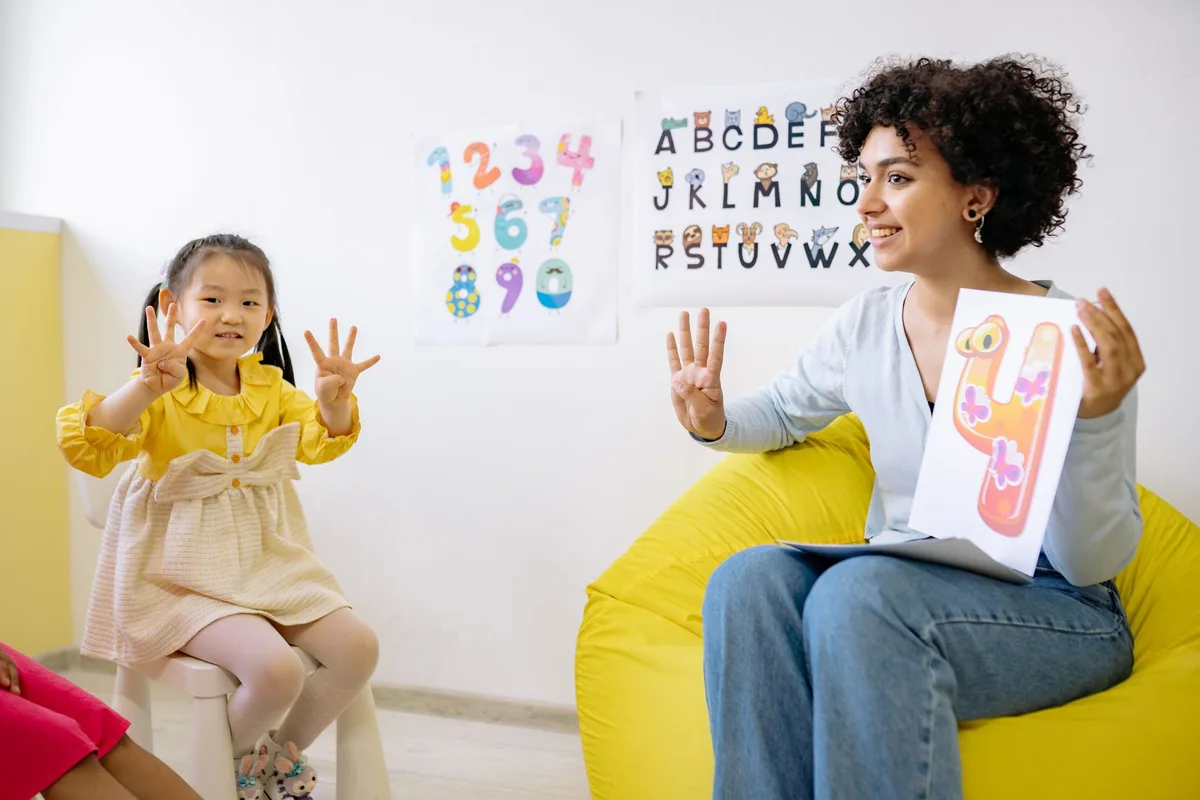
Should a 5 year old know how to add and subtract? Many 5-year-olds can join and separate small groups with objects—two blocks with three blocks, or taking one cracker away from a plate—without yet solving rows of written problems. Written addition and subtraction are a later layer on top of that hands-on work, not the only sign that math is developing.
Five-year-olds may be in kindergarten or transitional kindergarten, and classes differ. Ask the teacher what “adding and subtracting” looks like in your child’s room.
Should a 5 year old know how to add and subtract?
What it can look like
- Your child can put two groups of toys together and tell you how many there are now.
- They use fingers or toys and get a sensible total, but freeze when they see 2 + 3 on paper.
- They understand “give me one more” or “take one away” in play.
- They recite an addition fact they heard, then cannot show what it means.
- They resist any question that sounds like a quiz, even when they do the same idea during a game.
What to try at home
Practice joining and separating with snacks, toys, or steps. Say what you are doing in ordinary words: “We had four, and we added two.” What are the most important kindergarten math skills around this age include that kind of number talk, along with counting objects and comparing groups. What math skills should a kindergartener have is broader than written facts.
If you want to connect play to symbols, write the number sentence only after your child has moved the objects. How can I make math less stressful for my 5 year old? Keep it short, stop before frustration, and skip timed drills. A simple at-home check: start with three objects, add two, and ask how many now. You are looking for thinking, not speed.

When to talk with the teacher
Ask whether the class expects adding and subtracting with objects, drawings, or written problems, and how your child is doing with each. Talk with the teacher if your 5-year-old cannot join or separate a very small group even with toys after plenty of calm practice, or if paper addition is causing a lot of distress. If you are concerned about vision, hearing, or a learning difference, the teacher can help you plan a next step, and you can also talk with a qualified professional.
Frequently Asked Questions
Should a 5 year old know how to add and subtract on paper?
Not necessarily. Many 5-year-olds add and subtract by moving objects first. Paper problems come after that idea feels real.
What are the most important kindergarten math skills besides adding?
Counting objects with meaning, comparing amounts, and describing shapes are just as important. Addition grows out of those ideas.
Is it a problem if my 5-year-old still uses fingers?
No. Fingers are a visible way to keep track of a small amount. They often fade as the child gets faster at seeing small groups.
How can I make math less stressful for my 5 year old?
Use play and real objects, keep the sitting short, and avoid timed quizzes. End while your child is still willing.
What if preschool peers already write addition problems?
Children this age move at different paces, and programs differ. Ask your child’s teacher what adding and subtracting look like in this classroom.
Related questions
- What is number sense and why does it matter in early math?
- How can I make math less stressful for my 3 year old?
- What are the most important kindergarten math skills?
- What are the most important first grade math skills?
- What are the most important second grade math skills?
- Why is my kindergarten child struggling with math?
- What fun math games help kids practice without a fight?
- How can I help my child understand math word problems?
- How can I help my child with math?
- How can I make math less stressful for my 4 year old?
- How can I make math less stressful for my 5 year old?
- How can I make math less stressful for my 6 year old?
- How can I make math less stressful for my 7 year old?

What’s Included in the 12-Week Program?
Everything you need to build stronger reading skills, confidence, and a lifelong love of learning.
- Step-by-Step Reading Lessons Structured lessons matched to the reading skills your child needs to strengthen.
- Your Child’s Personalized Learning Path The assessment identifies where to begin, so your child works on the right skills — not simply material based on age or grade.
- Practice Activities & Progress Checks Fun, engaging activities reinforce each skill, with regular checks to see what’s improving and what still needs practice.
- Parent Teaching Guides Simple, step-by-step instructions show you exactly how to help — without needing teaching experience.
- Learn With Rocky or Learn Together Children who are ready can work more independently with Rocky, while parents who want to participate can follow Nancy’s guided approach.
- 12-Week Progress Reassessment & Report At the end of the program, your child completes a fresh assessment showing strengths, observed progress, remaining needs, and the recommended next learning step.
- Parent Support Included Join Motivation Mondays, Help Wednesdays, Friday Q&A with Nancy Barker. You don’t have to do this alone! You Have a WHOLE TEAM!
Quick & Easy Less Than 10 Min Assessment To Find Where Your Child May Be Falling Behind
Fill out the form and we’ll send you a free assessment to help you identify your child’s strengths and possible areas for growth.
Back to Questions Parents Ask: Early Math, K–2
Related questions
- What is number sense and why does it matter in early math?
- Should a 5 year old be able to count to 20?
- What are the most important preschool math skills?
- What are the most important kindergarten math skills?
- How can I help my kindergarten child with math?
- Why is my kindergarten child struggling with math?
- What are the most important first grade math skills?
- How can I help my first grade child with math?
- Why is my first grade child struggling with math?
- How do I help my first grader with addition?
- How to teach first grade place value?
- Should a 6 year old know math facts?
- What are the most important second grade math skills?
- How can I help my second grade child with math?
- Why is my second grade child struggling with math?
- Should a 7 year old know multiplication?
- How can I make math less stressful for my 3 year old?
- How can I make math less stressful for my 4 year old?
- How can I make math less stressful for my 5 year old?
- How can I make math less stressful for my 6 year old?
- How can I make math less stressful for my 7 year old?
- How can I help my child with math?
- Why does my child still count on their fingers?
- How can I help my child understand word problems?
- What fun math games help kids practice without a fight?
Back to Questions Parents Ask: Early Math, K–2
Find out where your child is today
Read Like Rocky is an at-home reading program for kids created by Dr. Nancy Barker, Ed.D., who has 49 years in education. Our Where to Start page walks you through finding your child’s starting point and what to work on first.
Find your child’s starting point
About the author and sources
Written by Dr. Nancy Barker, Ed.D. (Pepperdine), 49 years in education, creator of Read Like Rocky.
Research: Barker, N. (2011). Systems change: A study of response to intervention model implementation [Doctoral dissertation, Pepperdine University]. digitalcommons.pepperdine.edu/etd/173.
This article is educational and not a medical or school evaluation. If you are concerned about a learning difference, talk with your child’s teacher or a qualified professional.
Quick & Easy Less Than 10 Min Assessment To Find Where Your Child May Be Falling Behind
Fill out the form and we’ll send you a free assessment to help you identify your child’s strengths and possible areas for growth.