
How Can I Test My Child’s Reading Level at Home?

Quick & Easy Less Than 10 Min Assessment To Find Where Your Child May Be Falling Behind
Fill out the form and we’ll send you a free assessment to help you identify your child’s strengths and possible areas for growth.
You can do a simple reading level test at home by listening to your child read a short passage out loud and checking three things: how many words they read correctly, how smoothly they read, and whether they can tell you what it was about. Start with a book that matches their grade, then move to easier or harder text until you find the level where your child reads almost every word correctly and understands it.
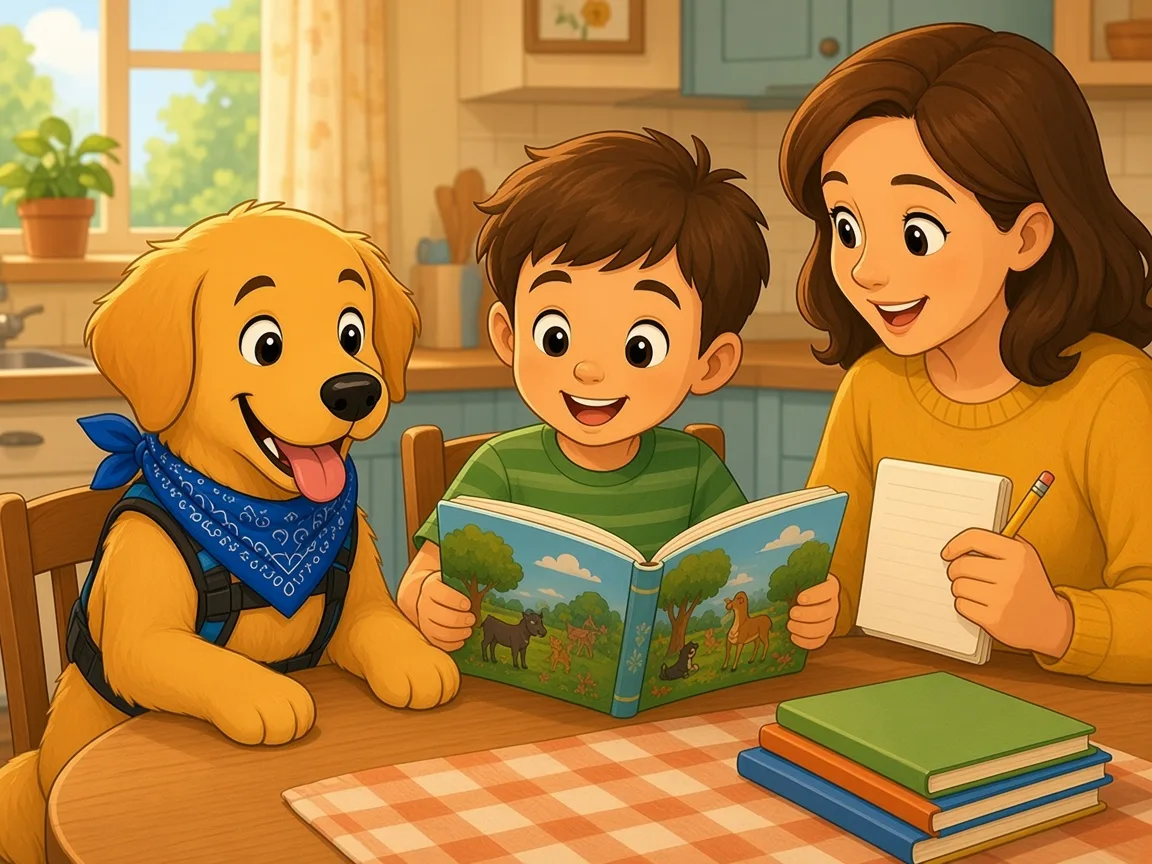
Many parents ask me this when a report card says “below grade level” and nobody explains what that means. Others just have a feeling that reading is harder for their child than it should be. A home check will not replace a school evaluation, but it gives you a clear starting point in about 15 minutes, and it shows you what to practice next.
What a Reading Level Really Tells You
A reading level is not a grade for your child. It is a description of the kind of text your child can read right now. Teachers usually think about three levels:
- Independent level: your child reads almost every word correctly and understands the story without help. This is the level for reading alone and for fun.
- Instructional level: your child reads most words correctly but needs a little support. This is the level where learning happens with an adult nearby.
- Frustration level: your child misses many words, reads very slowly, and loses the meaning. Text at this level discourages children and teaches very little.
When you test at home, you are really looking for the line between the instructional level and the frustration level. That tells you which books to use for practice.
How to Test Your Child’s Reading Level at Home, Step by Step
My doctoral work at Pepperdine University was on Response to Intervention. The core idea is to find out exactly where a child is, teach the next small step, and check again often. A home reading check follows the same pattern.
1. Pick three short passages
Choose one passage at your child’s grade, one a little easier, and one a little harder. A page or two from a leveled reader, a school reading book, or a library book marked for a grade or age works well. Aim for about 100 words for younger children and 150 to 200 words for older children. Pick something your child has not read before.
2. Make it calm, not a test
Tell your child, “I want to hear you read so I can pick books that are just right for you.” Sit side by side. Keep a copy of the passage, or a notepad, for yourself.
3. Listen and mark mistakes quietly
Start with the grade-level passage. Let your child read out loud without stopping them. Each time they skip a word, say the wrong word, or need you to tell them the word, make a small tick on your notepad. If they correct themselves, do not count it as a mistake. That is a good reading habit.
4. Count the accuracy
Count the words in the passage, subtract the mistakes, and divide by the total. For example, if the passage has 100 words and your child made 6 mistakes, they read 94 out of 100 words correctly. Many teachers treat roughly 95 percent or more as comfortable reading, about 90 to 94 percent as instructional, and below about 90 percent as too hard for now. Use these as rough guides, not exact cut-offs.
5. Listen for fluency
Accuracy is only part of the picture. Ask yourself:
- Does my child read in phrases, or one word at a time?
- Do they pause at periods and change their voice for questions?
- Do they sound out unfamiliar words, or guess from the first letter or the picture?
- Do they seem relaxed, or tired and tense by the end?
6. Check understanding
When they finish, close the book and ask, “Tell me what happened.” Then ask one or two questions, such as “Why do you think the character did that?” or “What was the most important part?” A child who reads every word but cannot retell the passage needs as much help as a child who stumbles over words.
7. Move up or down
If the grade-level passage was easy and your child understood it, try the harder one. If it was a struggle, try the easier one. The passage where your child reads most words correctly and can still retell it is a good estimate of their instructional level.
What Your Results Can Point To
Your notes are more useful than any single number. Here is how to read them:
- Many mistakes on short, common words: your child may need more work on sight words and on decoding, the skill of sounding words out.
- Guessing from the first letter: your child may be relying on pictures and context instead of reading through the whole word.
- Accurate but very slow: your child may need fluency practice, like rereading the same short passage several times.
- Smooth reading but weak retelling: comprehension is the focus, so talk about stories before, during, and after reading.
If you want to compare with typical expectations, our guides to typical reading for a 7-year-old and how many words a 7-year-old should be able to read can help.
What About Lexile and Letter Levels?
Schools often report reading levels with a Lexile measure, a guided reading letter (such as Level J), or a grade equivalent. Each system measures text a little differently, so the numbers do not convert neatly from one to another. If your child’s school uses one of these, ask the teacher what your child’s current level is and what level is expected at this point in the year. Then use your home check to see how your child does with real books between report cards.

What’s Included in the 12-Week Program?
Everything you need to build stronger reading skills, confidence, and a lifelong love of learning.
- Step-by-Step Reading Lessons Structured lessons matched to the reading skills your child needs to strengthen.
- Your Child’s Personalized Learning Path The assessment identifies where to begin, so your child works on the right skills — not simply material based on age or grade.
- Practice Activities & Progress Checks Fun, engaging activities reinforce each skill, with regular checks to see what’s improving and what still needs practice.
- Parent Teaching Guides Simple, step-by-step instructions show you exactly how to help — without needing teaching experience.
- Learn With Rocky or Learn Together Children who are ready can work more independently with Rocky, while parents who want to participate can follow Nancy’s guided approach.
- 12-Week Progress Reassessment & Report At the end of the program, your child completes a fresh assessment showing strengths, observed progress, remaining needs, and the recommended next learning step.
- Parent Support Included Join Motivation Mondays, Help Wednesdays, Friday Q&A with Nancy Barker. You don’t have to do this alone! You Have a WHOLE TEAM!
Quick & Easy Less Than 10 Min Assessment To Find Where Your Child May Be Falling Behind
Fill out the form and we’ll send you a free assessment to help you identify your child’s strengths and possible areas for growth.
Mistakes to Avoid
- Testing on a favorite book. A memorized book shows memory, not reading.
- Helping too fast. Wait a few seconds before giving a word. Your child needs a chance to try.
- Testing when your child is tired or upset. A bad night can make the results look worse than they are.
- Sharing the number with your child. Keep the focus on “just-right books,” not on a score.
When to Ask for More Help
A home reading check is a starting point, not a diagnosis. If your child is reading well below their grade, if reading has stayed hard for months even with practice, or if you notice signs like trouble with letter sounds, reversing many letters past first grade, or strong frustration with reading, talk with your child’s teacher. You can request a reading evaluation at school, and our guide on when to get your child tested for dyslexia explains the next steps. For hearing, vision, or health concerns, talk with your pediatrician.
Frequently Asked Questions
How can I test my child’s reading level at home for free?
Have your child read a short, unfamiliar passage out loud, count the mistakes, and ask them to retell it. You can also take the free Read Like Rocky reading assessment, which shows your child’s strengths and focus areas.
How often should I check my child’s reading level?
Every six to eight weeks is plenty for most children. Checking too often adds pressure and does not give enough time to see growth.
What percentage of words should my child read correctly?
Many teachers use about 95 percent or more as comfortable independent reading and roughly 90 to 94 percent as instructional reading with support. Below that, the book is usually too hard for now.
Is a home reading test as accurate as a school test?
No. A home check is a helpful snapshot, but school and professional evaluations use standard passages and scoring. Use your results to choose books and to start a conversation with the teacher.
My child reads well but doesn’t understand. What should I do?
Focus on comprehension. Ask your child to predict, retell, and explain while you read together, and use our list of questions to ask when reading together.
Get a Clear Picture of Your Child’s Reading
A home check tells you a lot, and a structured assessment tells you more. Read Like Rocky, a 12-week program created by Dr. Nancy Barker, Ed.D., who has 49 years in education, starts with a free reading assessment that shows your child’s strengths and focus areas, so you know exactly which skills to practice next.
Take the free reading assessment
Want more? Read how schools evaluate reading skills and why some children guess words.
About the author: Dr. Nancy Barker, Ed.D.; 49 years in education; Pepperdine literacy professor; creator of Read Like Rocky.
Research: Barker, N. (2011). Doctoral dissertation on Response to Intervention, Pepperdine University. Pepperdine Digital Commons.
This article is educational and not a medical or clinical evaluation. If you are concerned about your child, talk with your child’s teacher or pediatrician.
Quick & Easy Less Than 10 Min Assessment To Find Where Your Child May Be Falling Behind
Fill out the form and we’ll send you a free assessment to help you identify your child’s strengths and possible areas for growth.