
My Child May Need Dyslexia Support. What Help Can We Start at Home?

Quick & Easy Less Than 10 Min Assessment To Find Where Your Child May Be Falling Behind
Fill out the form and we’ll send you a free assessment to help you identify your child’s strengths and possible areas for growth.
If you think your child may need dyslexia support, you can start helping at home today with short, daily, multisensory practice in letter sounds, sounding out words, and reading aloud together, while you ask the school for a reading evaluation at the same time. Home practice does not replace dyslexia tutoring or a formal evaluation, but it keeps your child moving forward and gives you useful notes to share with the teacher.
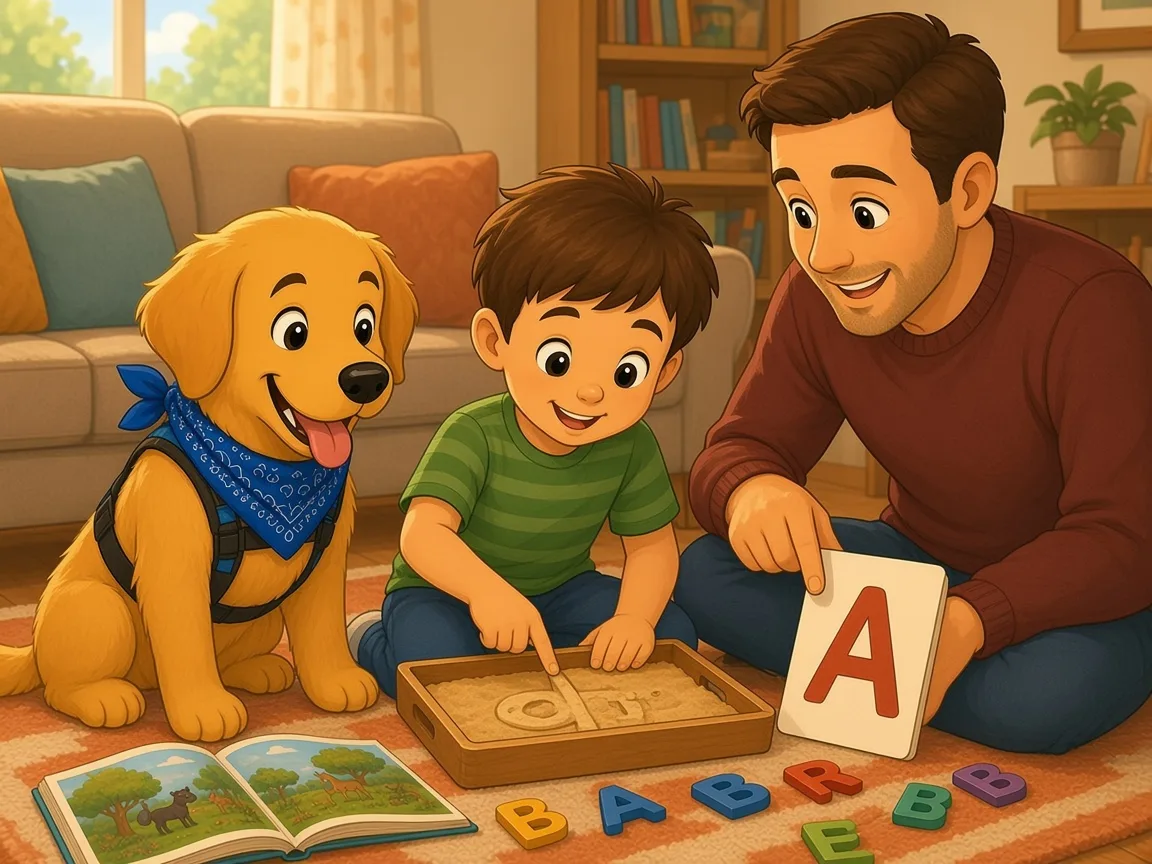
Parents often tell me they feel stuck. They see the signs, a waiting list stands between them and an answer, and they do not want to lose months. The good news is that the kind of teaching that helps children with dyslexia is the same kind of teaching that helps every struggling reader: clear, step-by-step, and practiced a little every day. You can begin that now.
What Dyslexia Support Usually Looks Like
Dyslexia is a difference in how the brain connects speech sounds to letters. Children with dyslexia are often bright and verbal, yet sounding out words, spelling, and reading quickly stay hard for them. The support that helps most is usually called structured literacy. Orton-Gillingham is one well-known approach of this kind. Good dyslexia tutoring tends to share a few features:
- Explicit: each sound and spelling pattern is taught directly, not left for the child to figure out.
- Systematic: skills go in a planned order, from simple to complex, and new skills build on old ones.
- Multisensory: children see, say, hear, and write or trace the letters, so more than one pathway supports memory.
- Cumulative and repeated: earlier skills come back again and again until they are automatic.
- Checked often: the teacher watches what the child can do now and adjusts the next lesson.
You do not need a certificate to use these ideas at home. You need a short routine, patience, and a plan.
7 Ways to Start Dyslexia Support at Home
My doctoral research at Pepperdine University was on Response to Intervention, which is built on one simple idea: find out exactly where a child is, teach the next small step, and check again often. These steps follow that pattern.
1. Find your starting point
Before you teach, listen. Ask your child to say the sounds of the letters, read a short list of simple words like cat, sit, hop, bed, and read a few sentences aloud. Write down which sounds and words are solid and which are shaky. Our guide on how to test your child’s reading level at home walks you through it.
2. Keep sessions short and daily
Fifteen to twenty minutes a day works better than one long session on the weekend. Children with reading difficulties tire quickly because reading takes so much effort. Stop while your child still feels successful.
3. Teach letter sounds with more than one sense
Have your child look at the letter, say its sound, and trace it with a finger in sand, salt, or shaving cream while saying the sound again. Air writing with a straight arm and writing on a textured surface also work. The goal is for your child to connect the shape, the sound, and the movement.
4. Practice hearing sounds without letters
Many children with dyslexia have trouble pulling words apart into sounds. Play quick oral games: “What sound does map start with?” “Say sun without the /s/.” “Tap one finger for each sound in ship.” These games build the listening skill that sounding out depends on. If sounding out is the sticking point, read why some children struggle to sound out words.
5. Build words with letter tiles
Use magnetic letters or paper squares. Build cat, then change one letter to make cap, then map, then mop. Your child says each sound, then blends the word. Changing one letter at a time shows how sounds and letters work together, which is the heart of structured literacy.
6. Read decodable text, then read to your child
Decodable books use mostly the sound patterns your child has already learned, so your child can succeed by sounding out instead of guessing. After that, read a richer book aloud to your child. Listening to stories above their reading level keeps vocabulary, background knowledge, and love of books growing while decoding catches up.
7. Protect your child’s confidence
Children with dyslexia often decide they are “not smart” long before anyone explains what is happening. Praise effort and strategies (“You tapped out every sound, that is exactly what good readers do”). Tell your child that their brain learns reading in its own way and that practice really does help. Give extra time and fewer words on a page when you can.
Dr. Nancy’s tip: Keep a simple notebook. Write the date, what you practiced, and what was easy or hard. After a few weeks you will have real information to bring to the teacher or tutor, and you will see progress that is easy to miss day to day.
Ask the School for an Evaluation at the Same Time
Home practice and a school evaluation are not either-or. In the United States, you can ask your child’s public school in writing to evaluate your child for a suspected learning disability, and the school must respond. Put your request in writing, keep a copy, and include what you have noticed at home. These guides explain the steps:

What’s Included in the 12-Week Program?
Everything you need to build stronger reading skills, confidence, and a lifelong love of learning.
- Step-by-Step Reading Lessons Structured lessons matched to the reading skills your child needs to strengthen.
- Your Child’s Personalized Learning Path The assessment identifies where to begin, so your child works on the right skills — not simply material based on age or grade.
- Practice Activities & Progress Checks Fun, engaging activities reinforce each skill, with regular checks to see what’s improving and what still needs practice.
- Parent Teaching Guides Simple, step-by-step instructions show you exactly how to help — without needing teaching experience.
- Learn With Rocky or Learn Together Children who are ready can work more independently with Rocky, while parents who want to participate can follow Nancy’s guided approach.
- 12-Week Progress Reassessment & Report At the end of the program, your child completes a fresh assessment showing strengths, observed progress, remaining needs, and the recommended next learning step.
- Parent Support Included Join Motivation Mondays, Help Wednesdays, Friday Q&A with Nancy Barker. You don’t have to do this alone! You Have a WHOLE TEAM!
Quick & Easy Less Than 10 Min Assessment To Find Where Your Child May Be Falling Behind
Fill out the form and we’ll send you a free assessment to help you identify your child’s strengths and possible areas for growth.
- When should I get my child tested for dyslexia?
- How do I request a reading evaluation at school?
- What is an IEP for reading?
When to Look for a Dyslexia Tutor
Consider a trained dyslexia tutor or reading specialist if your child is not making progress after several weeks of steady practice, if reading is causing tears or avoidance every day, or if an evaluation recommends specialized instruction. When you talk to a tutor, ask:
- Do you use a structured literacy approach, such as Orton-Gillingham, and what training do you have in it?
- How will you find my child’s starting point, and how will you measure progress?
- How often will you meet with my child, and what can I practice at home between sessions?
- Will you share what you see with my child’s teacher?
A good tutor will welcome these questions and will be glad you are already practicing at home.
Please note: Only a qualified professional can diagnose dyslexia. If your child also has trouble with attention, speech, hearing, or vision, talk with your pediatrician, because those can affect reading too. Our article on ADHD and dyslexia explains how the two can overlap.
Frequently Asked Questions
Can I do dyslexia tutoring at home myself?
You can do a lot at home with short, daily, structured practice in letter sounds, sounding out, and reading decodable books. If your child is not making progress after several weeks, add a trained tutor or ask the school for an evaluation.
What is the best kind of help for a child with dyslexia?
Most experts recommend structured literacy: explicit, systematic, multisensory teaching of sounds and spelling patterns, with lots of review. Orton-Gillingham is one well-known example of this approach.
Should I wait for a diagnosis before I start helping?
No. You can start gentle, structured practice right away while you request an evaluation. The notes you keep at home can also help the people evaluating your child.
How long does it take to see progress?
Every child is different. Look for small wins over weeks, such as knowing more letter sounds or reading a short decodable book with fewer errors, rather than big jumps overnight.
Do reversed letters mean my child has dyslexia?
Not by themselves. Many young children reverse letters while they are learning. Read why children reverse letters to see when it is typical and when to look closer.
Find Out Where Your Child Is Today
The first step in any good support plan is knowing your child’s starting point. Read Like Rocky, a 12-week program created by Dr. Nancy Barker, Ed.D., who has 49 years in education, starts with a free reading assessment that shows your child’s strengths and focus areas, so you know which skills to practice next.
Take the free reading assessment
About the author: Dr. Nancy Barker, Ed.D.; 49 years in education; Pepperdine literacy professor; creator of Read Like Rocky.
Research: Barker, N. (2011). Doctoral dissertation on Response to Intervention, Pepperdine University. Pepperdine Digital Commons.
This article is educational and not a medical or clinical evaluation. If you are concerned about your child, talk with your child’s teacher or pediatrician.
Quick & Easy Less Than 10 Min Assessment To Find Where Your Child May Be Falling Behind
Fill out the form and we’ll send you a free assessment to help you identify your child’s strengths and possible areas for growth.