
What Is Orton-Gillingham, and Does My Child Need That Kind of Help?

Quick & Easy Less Than 10 Min Assessment To Find Where Your Child May Be Falling Behind
Fill out the form and we’ll send you a free assessment to help you identify your child’s strengths and possible areas for growth.
Orton-Gillingham is a structured, multisensory way of teaching reading and spelling that shows children exactly how letters and sounds work, one step at a time, with lots of review. Your child may benefit from an Orton-Gillingham tutor if sounding out words, spelling, or remembering letter sounds stays hard even after regular classroom teaching, and especially if dyslexia is suspected or diagnosed.
Parents usually hear the name from a teacher, another parent, or a dyslexia website, and then wonder what it actually means and whether their child needs it. Here is a plain explanation, how to tell whether it fits your child, and what to ask before you hire a tutor.
What Is Orton-Gillingham?
Orton-Gillingham, often shortened to OG, is an approach to teaching reading rather than a single book or program. It is named after Dr. Samuel Orton, a neurologist who studied children with reading difficulties, and Anna Gillingham, an educator who worked with him to organize the teaching into a clear sequence in the 1930s. Many structured literacy programs used today grew out of their work.
An Orton-Gillingham lesson usually has these features:
- Explicit: each sound, spelling pattern, and rule is taught directly. The child is not expected to guess or figure it out alone.
- Systematic and sequential: skills come in a planned order, from simple sounds to longer words, and each new skill builds on the last.
- Multisensory: the child sees the letter, says the sound, hears it, and writes or traces it, so several pathways support memory.
- Cumulative: old skills are reviewed again and again until they are automatic.
- Diagnostic and responsive: the tutor watches each answer and adjusts the next lesson to what the child needs.
You may also hear the term structured literacy. That is the broader name for this style of teaching. Orton-Gillingham is one well-known structured literacy approach.
What Happens in a Typical Lesson?
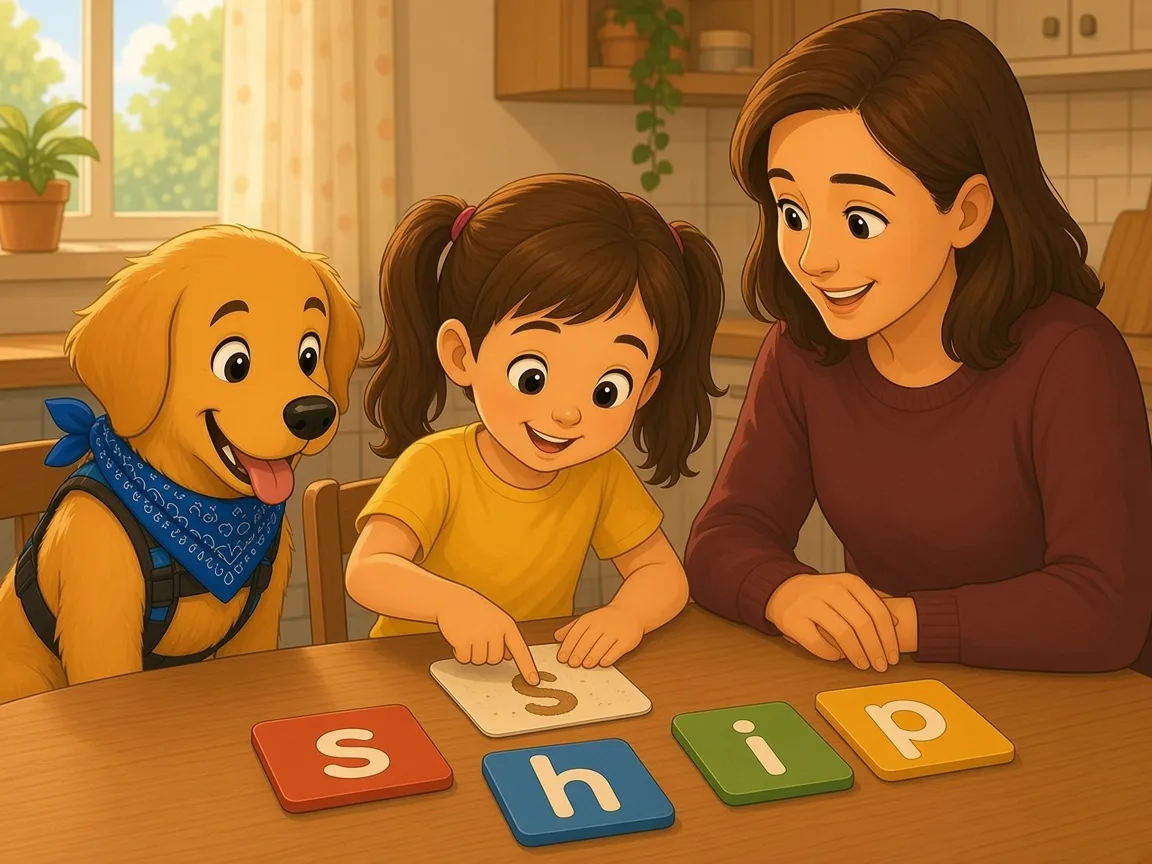
Lessons vary by tutor, but a session often includes a quick review of letter sounds with cards, a new sound or spelling pattern, listening games where the child pulls words apart into sounds, building and reading words with letter tiles, writing words and short sentences from dictation, and reading a short passage that uses the patterns the child already knows. A tutor might have your child tap one finger for each sound in ship, then write it while saying each sound aloud.
Because every step is practiced with eyes, ears, voice, and hands, children who have struggled to remember letters often find it finally starts to stick.
Does My Child Need That Kind of Help?
My doctoral research at Pepperdine University was on Response to Intervention, which starts with one question: what does this child need next, and is the current teaching working? Use that question here. These signs suggest your child may benefit from Orton-Gillingham or another structured literacy approach:
- Your child still mixes up or forgets letter sounds after they have been taught many times.
- Your child guesses at words from the first letter or the picture instead of sounding them out.
- Spelling is much harder than you would expect for your child’s age, even for words practiced all week.
- Reading aloud is slow and effortful, and your child tires quickly.
- Your child understands stories well when you read aloud, but cannot read similar words alone.
- Dyslexia runs in the family, or a school or clinical evaluation has identified dyslexia or a reading disability.
If several of these sound familiar, structured, multisensory teaching is worth looking into. If your child is reading well and only needs a little more practice, a regular reading routine at home may be enough. Our article Does my child need a reading tutor? helps you sort out which situation you are in.
Dr. Nancy’s tip: The name on the program matters less than how it is taught. Look for teaching that is clear, in order, multisensory, and checked often. A child who gets that every day, from a tutor, a teacher, or a parent following a good plan, is getting the heart of what Orton-Gillingham offers.
What to Ask an Orton-Gillingham Tutor
Training and experience vary widely, so ask before you commit:
- What Orton-Gillingham or structured literacy training have you completed, and how many supervised practice hours did it include?
- How will you find my child’s starting point before lessons begin?
- How will you measure progress, and how often will you share it with me?
- How many sessions a week do you recommend, and how long is each one?
- What can we practice at home between sessions?
- Are you willing to talk with my child’s teacher or school team?
A strong tutor will give clear, specific answers and will welcome your questions.
What You Can Do at Home Right Now
You do not have to wait for a tutor to begin. Short, daily practice in the same spirit helps:

What’s Included in the 12-Week Program?
Everything you need to build stronger reading skills, confidence, and a lifelong love of learning.
- Step-by-Step Reading Lessons Structured lessons matched to the reading skills your child needs to strengthen.
- Your Child’s Personalized Learning Path The assessment identifies where to begin, so your child works on the right skills — not simply material based on age or grade.
- Practice Activities & Progress Checks Fun, engaging activities reinforce each skill, with regular checks to see what’s improving and what still needs practice.
- Parent Teaching Guides Simple, step-by-step instructions show you exactly how to help — without needing teaching experience.
- Learn With Rocky or Learn Together Children who are ready can work more independently with Rocky, while parents who want to participate can follow Nancy’s guided approach.
- 12-Week Progress Reassessment & Report At the end of the program, your child completes a fresh assessment showing strengths, observed progress, remaining needs, and the recommended next learning step.
- Parent Support Included Join Motivation Mondays, Help Wednesdays, Friday Q&A with Nancy Barker. You don’t have to do this alone! You Have a WHOLE TEAM!
Quick & Easy Less Than 10 Min Assessment To Find Where Your Child May Be Falling Behind
Fill out the form and we’ll send you a free assessment to help you identify your child’s strengths and possible areas for growth.
- Find the starting point. Listen to your child say letter sounds and read simple words. Our guide on how to test your child’s reading level at home shows you how.
- Practice sounds with more than one sense. Look at the letter, say the sound, and trace it in sand or on a textured card.
- Tap and blend. Tap one finger per sound, then sweep the sounds together into a word.
- Change one letter at a time. Build cat with tiles, then cap, map, mop.
- Read decodable books. Choose books that use the sounds your child knows. See does my child need decodable books?
- Keep it short and kind. Fifteen to twenty minutes a day, ending while your child still feels successful.
For more home ideas, read what dyslexia help you can start at home.
Ask the School at the Same Time
A tutor and the school are not either-or. In the United States you can ask your child’s public school, in writing, to evaluate your child for a suspected learning disability. Our guides on when to get your child tested for dyslexia and how to request a reading evaluation at school walk you through it.
Please note: Only a qualified professional can diagnose dyslexia. If your child also has trouble with attention, speech, hearing, or vision, talk with your pediatrician, because those can affect reading too. Our article on ADHD and dyslexia explains how they can overlap.
Frequently Asked Questions
Is Orton-Gillingham only for children with dyslexia?
No. It was designed with dyslexia in mind, but clear, step-by-step, multisensory teaching of sounds and spelling can help many beginning and struggling readers.
Is Orton-Gillingham a specific program I can buy?
It is an approach, not one product. Several published programs and tutor trainings are based on it, and they differ in materials and pacing.
How long does Orton-Gillingham tutoring take?
It depends on your child’s starting point and how often lessons happen. Ask the tutor how they will measure progress, and look for steady small gains over weeks.
Can a parent teach Orton-Gillingham at home?
Parents can use its core ideas at home: short daily lessons, multisensory practice, one skill at a time, and lots of review. If progress stalls after several weeks, add a trained tutor or ask the school for an evaluation.
Do I need a diagnosis before hiring an Orton-Gillingham tutor?
No. Many families start tutoring while they wait for an evaluation. Keep notes on what you see, because they help both the tutor and the evaluators.
Find Out Where Your Child Is Today
Whatever kind of help you choose, the first step is knowing your child’s starting point. Read Like Rocky, a 12-week program created by Dr. Nancy Barker, Ed.D., who has 49 years in education, starts with a free reading assessment that shows your child’s strengths and focus areas, so you know which skills to work on next.
Find out where your child should start
About the author: Dr. Nancy Barker, Ed.D.; 49 years in education; Pepperdine literacy professor; creator of Read Like Rocky.
Research: Barker, N. (2011). Doctoral dissertation on Response to Intervention, Pepperdine University. Pepperdine Digital Commons.
This article is educational and not a medical or clinical evaluation. If you are concerned about your child, talk with your child’s teacher or pediatrician.
Quick & Easy Less Than 10 Min Assessment To Find Where Your Child May Be Falling Behind
Fill out the form and we’ll send you a free assessment to help you identify your child’s strengths and possible areas for growth.