
Does Listening to Audiobooks Count as Reading?

Quick & Easy Less Than 10 Min Assessment To Find Where Your Child May Be Falling Behind
Fill out the form and we’ll send you a free assessment to help you identify your child’s strengths and possible areas for growth.
Yes and no. Listening to audiobooks counts as reading for building vocabulary, comprehension, and a love of stories, but it does not count as practice for decoding printed words, so a child who is still learning to read needs both listening and time reading print with their own eyes.
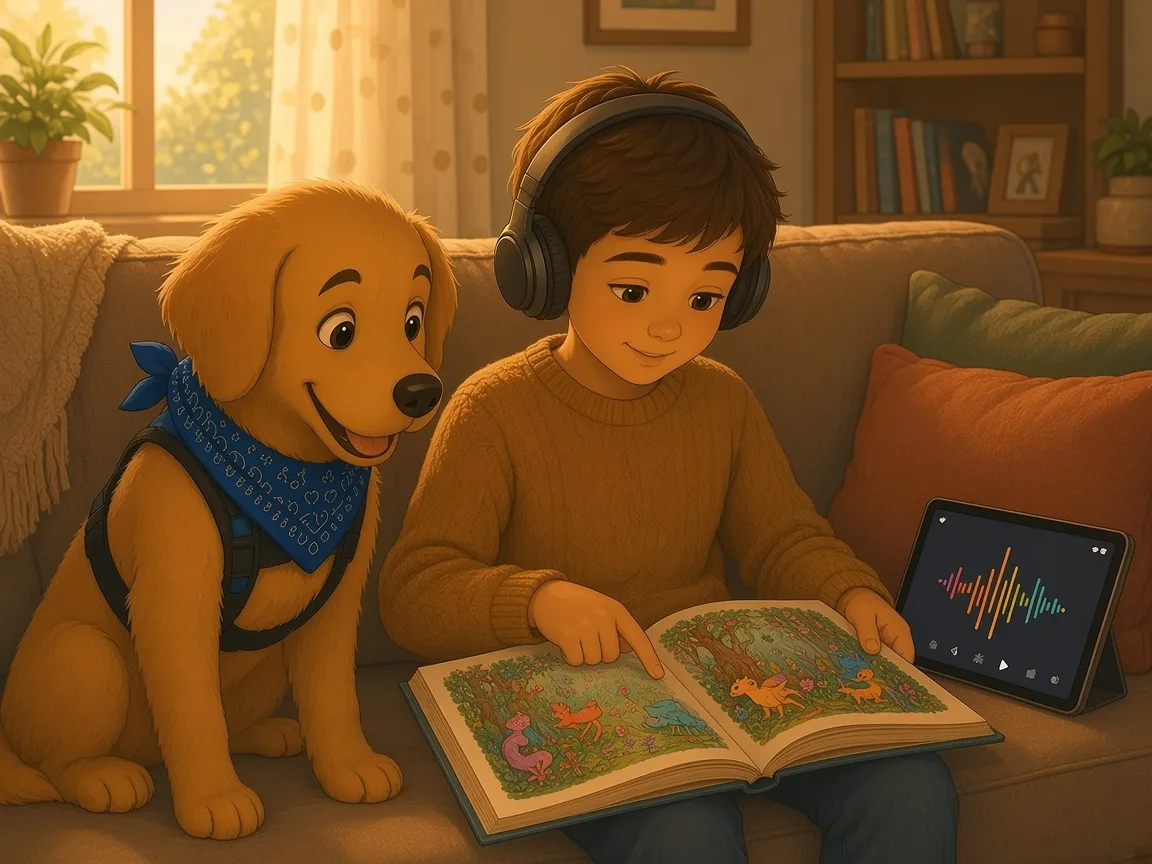
Parents ask this question for good reasons. Your child may finish three audiobooks a week but stall on a single page of print. A teacher may accept audiobook minutes on a reading log, or may not. Or your child may simply love listening and you want to know whether it “counts.” The honest answer depends on which part of reading you mean, because reading is really two jobs working together.
Reading Is Two Jobs: Decoding and Understanding
A helpful way to picture reading is as two skills multiplied together:
- Word reading (decoding). Turning printed letters into sounds and words, quickly and accurately. This is phonics, sight recognition, and fluency.
- Language comprehension. Understanding what the words mean once you have them: vocabulary, background knowledge, sentence structure, following a story, and making inferences.
Strong readers need both. Audiobooks build the second job very well. They do almost nothing for the first job, because your child never has to look at a letter to hear the words.
What Audiobooks Do Build
- Vocabulary. Books use words that rarely come up in everyday talk. Hearing them in context, pronounced correctly, adds them to your child’s mental word bank.
- Comprehension and story sense. Following a plot, keeping track of characters, predicting what happens next, and understanding why a character acted a certain way are all thinking skills your child practices while listening.
- Background knowledge. Nonfiction audiobooks and stories set in other places and times give children knowledge that makes future reading easier to understand.
- A model of fluent, expressive reading. A good narrator shows what reading should sound like: smooth pace, pauses at punctuation, and voice that matches the meaning.
- Access to grade-level ideas. A child who reads below grade level can still enjoy and discuss the same books as classmates, which protects confidence and curiosity.
- Motivation. For many children, a great story heard aloud is what makes them want more books.
What Audiobooks Don’t Build
- Phonics and decoding. Your child is not connecting letters to sounds, so the code of written English is not being practiced.
- Visual word recognition. Children become fast readers by seeing words in print many times until they recognize them instantly. Listening skips that step.
- Reading fluency in print. Hearing fluent reading is a good model, but your child still has to practice reading smoothly from the page.
- Spelling. Seeing words in print helps children remember how they are spelled.
That is why a child can understand a challenging audiobook and still struggle to read a much easier book on paper. The listening skill is ahead of the decoding skill. That gap is common, and it tells you where to focus.
Does Listening to Audiobooks Count as Reading for a Struggling Reader?
For a child who finds reading hard, audiobooks are a valuable support, not a replacement. They keep your child’s vocabulary and comprehension growing while decoding catches up, so your child doesn’t fall behind in ideas and knowledge just because the words on the page are hard.
The risk is when audiobooks quietly replace all print reading. A child who avoids decoding practice doesn’t get the repetition that builds word reading, and the gap can widen. If your child strongly prefers listening because print feels hard, take that as a sign to find out which reading skill needs attention. Our guide on how to help a struggling reader at home walks through next steps.
How to Use Audiobooks So They Help Reading Grow
1. Listen and follow along in print
Have your child follow the printed text while the audiobook plays, tracking with a finger or a bookmark. Seeing each word while hearing it links the sounds to the spelling. Many library apps offer the ebook and audiobook together, or you can borrow both versions of the same title.
2. Pair listening with print reading every day
Keep audiobooks for the books that are above your child’s reading level, and add a short daily session of reading aloud from a book that is a comfortable level. Ten to fifteen minutes of print reading each day, alongside the listening, keeps both skills moving.
3. Reread a passage after listening
After your child listens to a chapter, pick a short paragraph and have them read it aloud to you. Because they already know the story and the words, the reading is easier, and success builds confidence.
4. Talk about the story
Comprehension grows when children explain what they heard. Ask questions like “What was that chapter mostly about?”, “Why do you think she did that?”, and “What do you think will happen next?” Point out one or two interesting words from the story and use them in your own conversation that week.
5. Choose the right speed and length
Most audiobook apps let you slow the narration. For younger children or children following along in print, a slightly slower speed makes it easier to track. Short listening sessions with a conversation afterward beat hours of background listening.

What’s Included in the 12-Week Program?
Everything you need to build stronger reading skills, confidence, and a lifelong love of learning.
- Step-by-Step Reading Lessons Structured lessons matched to the reading skills your child needs to strengthen.
- Your Child’s Personalized Learning Path The assessment identifies where to begin, so your child works on the right skills — not simply material based on age or grade.
- Practice Activities & Progress Checks Fun, engaging activities reinforce each skill, with regular checks to see what’s improving and what still needs practice.
- Parent Teaching Guides Simple, step-by-step instructions show you exactly how to help — without needing teaching experience.
- Learn With Rocky or Learn Together Children who are ready can work more independently with Rocky, while parents who want to participate can follow Nancy’s guided approach.
- 12-Week Progress Reassessment & Report At the end of the program, your child completes a fresh assessment showing strengths, observed progress, remaining needs, and the recommended next learning step.
- Parent Support Included Join Motivation Mondays, Help Wednesdays, Friday Q&A with Nancy Barker. You don’t have to do this alone! You Have a WHOLE TEAM!
Quick & Easy Less Than 10 Min Assessment To Find Where Your Child May Be Falling Behind
Fill out the form and we’ll send you a free assessment to help you identify your child’s strengths and possible areas for growth.
Do Audiobooks Count on a School Reading Log?
That depends on your child’s teacher and what the reading log is for. If the goal is building a reading habit and comprehension, many teachers welcome audiobooks. If the goal is decoding and fluency practice, the teacher may want print reading. It is reasonable to ask: “Can audiobook minutes count, or do you want print reading for this log?” If your child receives reading support, ask whether listening while following along can be part of the plan. Some children with learning differences use audio versions of texts as an accommodation in class.
When to Look Closer
Consider finding out more about your child’s reading skills if:
- Your child understands books read aloud far better than books they read alone.
- They avoid reading print but happily listen.
- Reading print is slow, effortful, or full of guesses.
- They mix up or skip small words, or have trouble sounding out new words.
A gap between listening and reading is a clue, not a diagnosis. Talk with your child’s teacher, and if you are concerned about dyslexia or another learning difference, ask the school about an evaluation. Only a qualified professional can diagnose a learning difference. If your child also struggles to understand what they read in print, see why a child can read words but not understand them.
Frequently Asked Questions
Does listening to audiobooks count as reading?
It counts for vocabulary, comprehension, background knowledge, and enjoyment of books. It does not replace practice reading printed words, which children need to become fluent readers.
Is listening to an audiobook cheating?
No. Listening is a real way to experience and understand a book. It practices different skills than print reading, so most children benefit from doing both.
Can audiobooks help a struggling reader?
Yes, especially when your child follows along in print. Audiobooks keep vocabulary and comprehension growing while your child works on decoding and fluency.
Should my child listen to audiobooks instead of reading?
Use audiobooks in addition to reading, not instead of it. For a closer look at one grade, see whether it’s okay for a 4th grader to listen to audiobooks instead of reading.
How much print reading should my child do if they love audiobooks?
A short daily session, about ten to fifteen minutes of reading aloud from a comfortable book, is a realistic goal alongside listening. Consistency matters more than long sessions.
Find Out Which Reading Skills Need Attention
If your child loves listening but struggles with print, the next step is knowing exactly which skill is holding them back. Read Like Rocky, a 12-week program created by Dr. Nancy Barker, Ed.D., who has 49 years in education, begins with a free reading assessment that shows strengths and focus areas, so you know where to start.
Find out where your child should start
About the author: Dr. Nancy Barker, Ed.D.; 49 years in education; Pepperdine literacy professor; creator of Read Like Rocky.
Research: Barker, N. (2011). Doctoral dissertation on Response to Intervention, Pepperdine University. Pepperdine Digital Commons.
This article is educational and not a medical or clinical evaluation. If you are concerned about your child, talk with your child’s teacher or pediatrician.
Quick & Easy Less Than 10 Min Assessment To Find Where Your Child May Be Falling Behind
Fill out the form and we’ll send you a free assessment to help you identify your child’s strengths and possible areas for growth.