
Does My Child Need Reading Glasses, or Is It a Reading Skill Gap?

Quick & Easy Less Than 10 Min Assessment To Find Where Your Child May Be Falling Behind
Fill out the form and we’ll send you a free assessment to help you identify your child’s strengths and possible areas for growth.
Your child may need reading glasses if they squint, rub their eyes, get headaches, hold books very close, or lose their place even on easy text, and only an eye exam can tell you for sure. If their eyes check out fine but reading is still hard, the problem is usually a reading skill gap, such as phonics, decoding, or fluency, and glasses will not fix that.
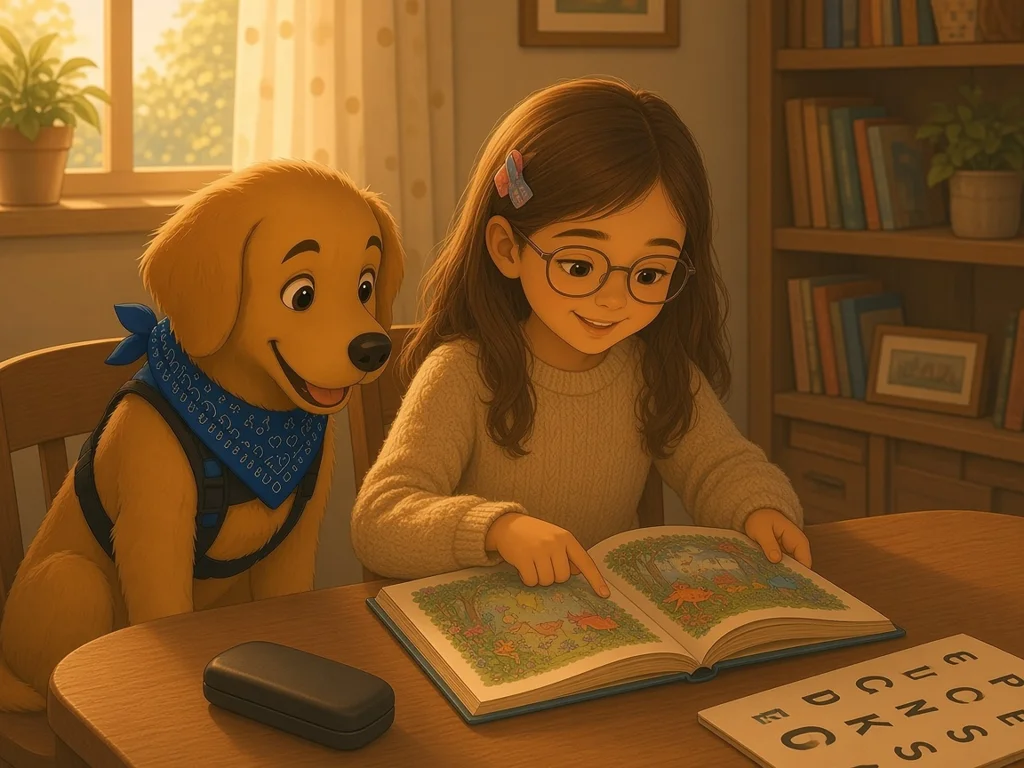
Many parents wonder about this when their child starts to struggle. It is a smart question to ask, because a child who cannot see the print clearly will have a hard time no matter how good the teaching is. But vision is only one piece. Many children who struggle with reading have perfectly clear eyesight and need help with the skills of reading itself. The good news is that you can usually sort out which one you are dealing with, and in some cases it is both.
Signs Your Child May Have a Vision Problem
Watch your child while they read, do homework, or look at a screen. These signs suggest it is time for an eye exam:
- Squinting, tilting the head, or covering one eye when looking at a book or the board.
- Holding books very close to the face or leaning in toward the page.
- Rubbing the eyes often, or eyes that look red or watery after reading.
- Headaches or eye strain, especially after school or after reading time.
- Complaints that words look blurry, doubled, or “move around” on the page.
- Losing their place a lot or needing a finger to keep track, even on easy text.
- Avoiding close work like reading, drawing, or puzzles, while doing fine with active play.
- Trouble seeing the board or copying from it at school.
A child often does not know their vision is unusual. If the world has always looked blurry up close, they assume that is how it looks for everyone, so they rarely say “I can’t see.” Their behavior usually tells you first.
Signs It Is a Reading Skill Gap Instead
These patterns point more toward reading skills than eyesight:
- Guessing at words from the first letter or the picture instead of sounding them out.
- Trouble connecting letters to sounds, or mixing up vowel sounds.
- Reading slowly and choppily even when the print is large and clear.
- Struggling to sound out new words but understanding well when someone reads aloud to them.
- Spelling that does not match the sounds in the word.
- Forgetting sight words they knew the day before.
- Understanding stories when listening but not when reading on their own.
The key clue is this: if your child can see the letters clearly but cannot turn them into words easily, the struggle is with decoding, not eyesight. Bigger print or glasses will not change that.
Why School Vision Screenings Can Miss Problems
Many families are told their child “passed the vision screening,” so they rule out eyes completely. A school screening is helpful, but it is usually a quick check of how clearly a child sees at a distance, like reading an eye chart across the room. Reading happens up close. A child can pass a distance screening and still have trouble focusing on near print, keeping both eyes working together, or tracking smoothly across a line of text.
A comprehensive eye exam with an optometrist or ophthalmologist looks at much more than a screening does. If you see the vision signs listed above, ask for a full exam and mention that your child is having trouble with reading and close-up work.
Can Glasses Fix Reading Problems?
Glasses fix blurry vision. When blurry vision was the only thing in the way, reading can improve quickly once a child can see the page. But glasses cannot teach phonics, build fluency, or grow vocabulary. If a child has fallen behind because they could not see well, they may still have skill gaps to close after they get glasses.
It is also important to know that dyslexia is not a vision problem. Dyslexia is a language-based difference in how the brain processes the sounds in words. Children with dyslexia can have perfect eyesight. Vision care is important for every child, but it is not a treatment for dyslexia. If you are wondering about that, our guide on what dyslexia is explains more.
What to Do Next: A Simple Plan for Parents
- Write down what you notice. Note the signs from both lists above for a week. Specific examples are helpful for both the eye doctor and the teacher.
- Schedule a comprehensive eye exam if you see any vision signs, even if your child passed a school screening.
- Check reading skills at the same time. Do not wait for the eye exam to find out where your child is with reading. A simple reading check shows whether letter sounds, decoding, sight words, or fluency need attention. Our guide on how to test your child’s reading level at home walks you through it.
- Talk with your child’s teacher. Ask what they see in class: Does your child struggle to copy from the board? Do they guess at words? Teachers can often tell you which pattern fits.
- If glasses are prescribed, give it a few weeks. Make sure your child actually wears them during reading, then see what changes. If reading is still hard once they can see clearly, focus on skill practice.
- Practice a little every day. Short, steady practice on the specific skill your child needs works better than long sessions. Our tips on helping a struggling reader at home are a good place to start.

What’s Included in the 12-Week Program?
Everything you need to build stronger reading skills, confidence, and a lifelong love of learning.
- Step-by-Step Reading Lessons Structured lessons matched to the reading skills your child needs to strengthen.
- Your Child’s Personalized Learning Path The assessment identifies where to begin, so your child works on the right skills — not simply material based on age or grade.
- Practice Activities & Progress Checks Fun, engaging activities reinforce each skill, with regular checks to see what’s improving and what still needs practice.
- Parent Teaching Guides Simple, step-by-step instructions show you exactly how to help — without needing teaching experience.
- Learn With Rocky or Learn Together Children who are ready can work more independently with Rocky, while parents who want to participate can follow Nancy’s guided approach.
- 12-Week Progress Reassessment & Report At the end of the program, your child completes a fresh assessment showing strengths, observed progress, remaining needs, and the recommended next learning step.
- Parent Support Included Join Motivation Mondays, Help Wednesdays, Friday Q&A with Nancy Barker. You don’t have to do this alone! You Have a WHOLE TEAM!
Quick & Easy Less Than 10 Min Assessment To Find Where Your Child May Be Falling Behind
Fill out the form and we’ll send you a free assessment to help you identify your child’s strengths and possible areas for growth.
When It Is Both
Some children have a vision problem and a reading skill gap at the same time. A child who could not see the page well in kindergarten or first grade may have missed key phonics practice, so even after getting glasses they are behind. That is not a failure on anyone’s part. It simply means your child needs two kinds of help: clear vision, and patient teaching to fill in the skills they missed. Children can catch up, and every small win builds their confidence.
Frequently Asked Questions
How do I know if my child needs glasses for reading?
Look for squinting, holding books very close, rubbing eyes, headaches after reading, or complaints of blurry or doubled words. Any of these is a reason to get a comprehensive eye exam. Only an eye doctor can tell you if glasses are needed.
My child passed the school vision screening. Can they still have a vision problem?
Yes. Many school screenings mainly check distance vision. Reading happens up close, so a child can pass a screening and still have trouble focusing on near print or keeping their place. A full eye exam checks more.
Will glasses help my child read better?
If blurry vision is part of the problem, glasses can make reading much more comfortable. Glasses do not teach reading skills, so if your child has gaps in phonics or fluency, they will still need practice on those skills.
Is dyslexia caused by poor eyesight?
No. Dyslexia is a language-based difference in how the brain handles the sounds in words. Children with dyslexia often have normal vision. An eye exam is still a good idea for any child who struggles, so that vision is not adding to the difficulty.
Why does my child skip lines or lose their place when reading?
It can be a sign of a vision or eye-tracking issue, or it can happen when decoding takes so much effort that a child loses track. An eye exam plus a reading skills check will help you tell which. For more on this, see why children skip words when reading.
Find Out Which Reading Skills Need Attention
An eye exam answers the vision question. A reading check answers the skills question. Read Like Rocky, a 12-week program created by Dr. Nancy Barker, Ed.D., who has 49 years in education, begins with a free reading assessment that shows your child’s strengths and focus areas, so you know where to start.
Find out where your child should start
About the author: Dr. Nancy Barker, Ed.D.; 49 years in education; Pepperdine literacy professor; creator of Read Like Rocky.
Research: Barker, N. (2011). Doctoral dissertation on Response to Intervention, Pepperdine University. Pepperdine Digital Commons.
This article is educational and not a medical or clinical evaluation. If you are concerned about your child, talk with your child’s teacher or pediatrician.
Quick & Easy Less Than 10 Min Assessment To Find Where Your Child May Be Falling Behind
Fill out the form and we’ll send you a free assessment to help you identify your child’s strengths and possible areas for growth.