
Where Can I Find a Free Reading Level Test for Kids?

Quick & Easy Less Than 10 Min Assessment To Find Where Your Child May Be Falling Behind
Fill out the form and we’ll send you a free assessment to help you identify your child’s strengths and possible areas for growth.
You can find a free reading level test for kids in three places: your child’s school (which already screens reading and can share the results if you ask), a free online reading assessment like the one at Read Like Rocky, and a simple 10-minute check you do at home by listening to your child read aloud. The most useful free test does more than give a number. It shows which reading skills your child has and which one to practice next.
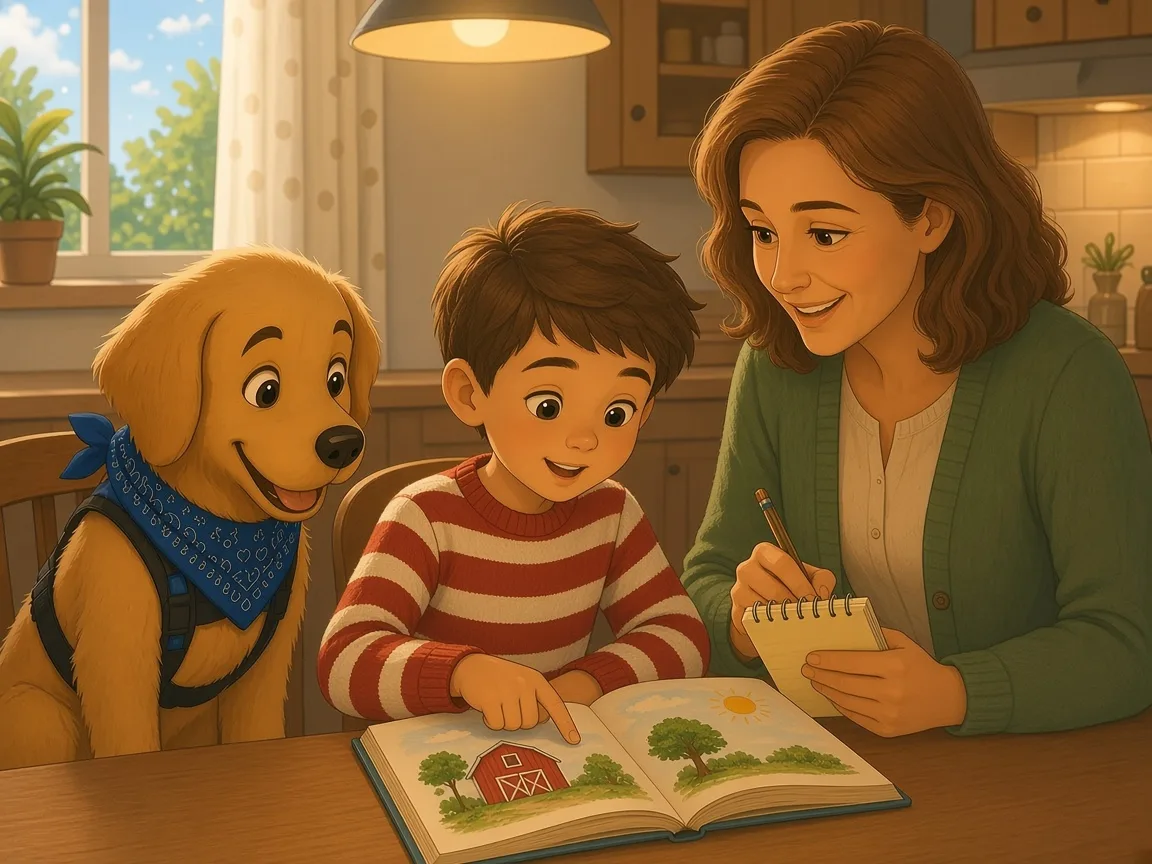
Many parents start searching for a reading level test because something feels off. Homework takes forever, your child avoids reading, or a teacher mentioned they are “a little behind.” A free test is a smart first step. It turns a worry into information you can act on, and it costs nothing but a few minutes.
What Does a Reading Level Test Actually Measure?
“Reading level” sounds like one number, but reading is made of several skills that grow together. A good test looks at more than one of them:
- Phonemic awareness: hearing and playing with the sounds in spoken words, such as knowing that “cat” starts with /k/.
- Phonics and decoding: matching letters to sounds and sounding out words your child has never seen.
- Sight words: reading common words like “the,” “said,” and “was” quickly and automatically.
- Fluency: reading smoothly, accurately, and with expression at a comfortable pace.
- Vocabulary: knowing what the words mean.
- Comprehension: understanding and remembering what was read.
A child can be strong in one area and weak in another. A second grader might read every word correctly but slowly, while another reads quickly but guesses at long words. The same “level” can hide very different needs, which is why the skill breakdown matters more than the label.
Where Can I Find a Free Reading Level Test?
1. Ask your child’s school
Most schools screen students’ reading during the year. Ask the teacher, “What reading screening did my child take, what were the results, and which skills is my child working on?” You have a right to see your child’s school records, and teachers are usually glad to share. This is free, and it tells you how the school sees your child.
2. Take a free online reading assessment
An online assessment is convenient because you can do it at home today. Look for one that is built around reading skills, not just a quiz about a story, and that gives you clear results you can use. Read Like Rocky’s free reading assessment was created by Dr. Nancy Barker, Ed.D., and it shows your child’s strengths and focus areas, so you know where to begin.
3. Your local public library
Children’s librarians can help you find books at a comfortable level for your child and point you to free reading resources in your area. They are not a substitute for a school evaluation, but they are a wonderful, free partner.
4. A quick check at home
You can learn a lot in 10 minutes just by listening. The steps are below.
How Can I Check My Child’s Reading Level at Home?
- Pick a short passage from a book meant for your child’s grade. Choose something they have not read before.
- Have your child read it aloud while you follow along on your own copy or over their shoulder. Don’t help unless they are stuck for several seconds.
- Notice the misreads. Are they skipping words, guessing from the first letter, or stopping to sound out short words? Make a small mark for each word they miss.
- Listen to how it sounds. Is the reading smooth or choppy? Does your child pause at periods? Choppy, word-by-word reading points to fluency practice.
- Ask two or three questions. “What happened first?” “Why did the character do that?” If your child read every word but can’t tell you what happened, comprehension or vocabulary needs attention.
- Adjust the book. If your child misses many words, try an easier book. If they read it effortlessly and understand it, try a harder one. The level where they read most words correctly and can still talk about it is a good level for practice.
Keep the mood light. Say, “I just want to see which books are a good fit for you,” not “This is a test.” Children read better when they are not afraid of getting it wrong.
What Should I Do With the Results?
A test is only helpful if it changes what happens next. Once you know where your child is:

What’s Included in the 12-Week Program?
Everything you need to build stronger reading skills, confidence, and a lifelong love of learning.
- Step-by-Step Reading Lessons Structured lessons matched to the reading skills your child needs to strengthen.
- Your Child’s Personalized Learning Path The assessment identifies where to begin, so your child works on the right skills — not simply material based on age or grade.
- Practice Activities & Progress Checks Fun, engaging activities reinforce each skill, with regular checks to see what’s improving and what still needs practice.
- Parent Teaching Guides Simple, step-by-step instructions show you exactly how to help — without needing teaching experience.
- Learn With Rocky or Learn Together Children who are ready can work more independently with Rocky, while parents who want to participate can follow Nancy’s guided approach.
- 12-Week Progress Reassessment & Report At the end of the program, your child completes a fresh assessment showing strengths, observed progress, remaining needs, and the recommended next learning step.
- Parent Support Included Join Motivation Mondays, Help Wednesdays, Friday Q&A with Nancy Barker. You don’t have to do this alone! You Have a WHOLE TEAM!
Quick & Easy Less Than 10 Min Assessment To Find Where Your Child May Be Falling Behind
Fill out the form and we’ll send you a free assessment to help you identify your child’s strengths and possible areas for growth.
- Practice the next skill, not every skill. If decoding is the gap, short daily phonics practice helps more than harder chapter books.
- Use the right books. Practice with books your child can read with few mistakes, and keep reading harder, more interesting books aloud to your child so vocabulary keeps growing.
- Keep sessions short. Ten to twenty focused minutes a day beats one long, tearful hour on the weekend.
- Talk with the teacher. Share what you noticed and ask how you can support the same skills at home.
- Check again later. Re-test after several weeks of practice to see progress and choose the next focus.
If your child keeps struggling with sounding out words and spelling even with good teaching, ask the school about a formal evaluation. A free screening can raise a flag, but only a qualified professional can diagnose a learning difference such as dyslexia.
Is a Low Score Something to Worry About?
A low score is information, not a verdict. It tells you where to start. Many children who test behind grow quickly once they practice the right skill at the right level. What matters most is that your child keeps believing they can learn to read, so celebrate effort and small wins, and let the results guide your practice instead of your worry.
Frequently Asked Questions
Are free reading level tests accurate?
A free screening gives you a useful starting point, especially when it looks at specific skills. It is not a diagnosis. If results worry you, share them with your child’s teacher and ask about the school’s own assessments.
What age can my child take a reading level test?
Children can be screened as early as preschool and kindergarten, when tests focus on letters and sounds. Older children are tested on fluency and comprehension too.
How often should I check my child’s reading level?
Every few months is plenty for most children. Checking too often adds pressure without showing much change.
Can a reading level test tell me if my child has dyslexia?
No. A screening can show patterns, like ongoing trouble sounding out words, that are worth discussing with the school, but only a qualified professional can diagnose dyslexia.
Find Out Where Your Child Is Today
If you are looking for a free reading level test for kids, start with one that shows you what to practice next. Read Like Rocky, a 12-week program created by Dr. Nancy Barker, Ed.D., who has 49 years in education, starts with a free reading assessment that shows your child’s strengths and focus areas, so you know exactly where to begin.
Find out where your child should start
About the author: Dr. Nancy Barker, Ed.D.; 49 years in education; Pepperdine literacy professor; creator of Read Like Rocky.
Research: Barker, N. (2011). Doctoral dissertation on Response to Intervention, Pepperdine University. Pepperdine Digital Commons.
This article is educational and not a medical or clinical evaluation. If you are concerned about your child, talk with your child’s teacher or pediatrician.
Quick & Easy Less Than 10 Min Assessment To Find Where Your Child May Be Falling Behind
Fill out the form and we’ll send you a free assessment to help you identify your child’s strengths and possible areas for growth.