
What Do I Say When My Child Says “I’m Dumb”?

Quick & Easy Less Than 10 Min Assessment To Find Where Your Child May Be Falling Behind
Fill out the form and we’ll send you a free assessment to help you identify your child’s strengths and possible areas for growth.
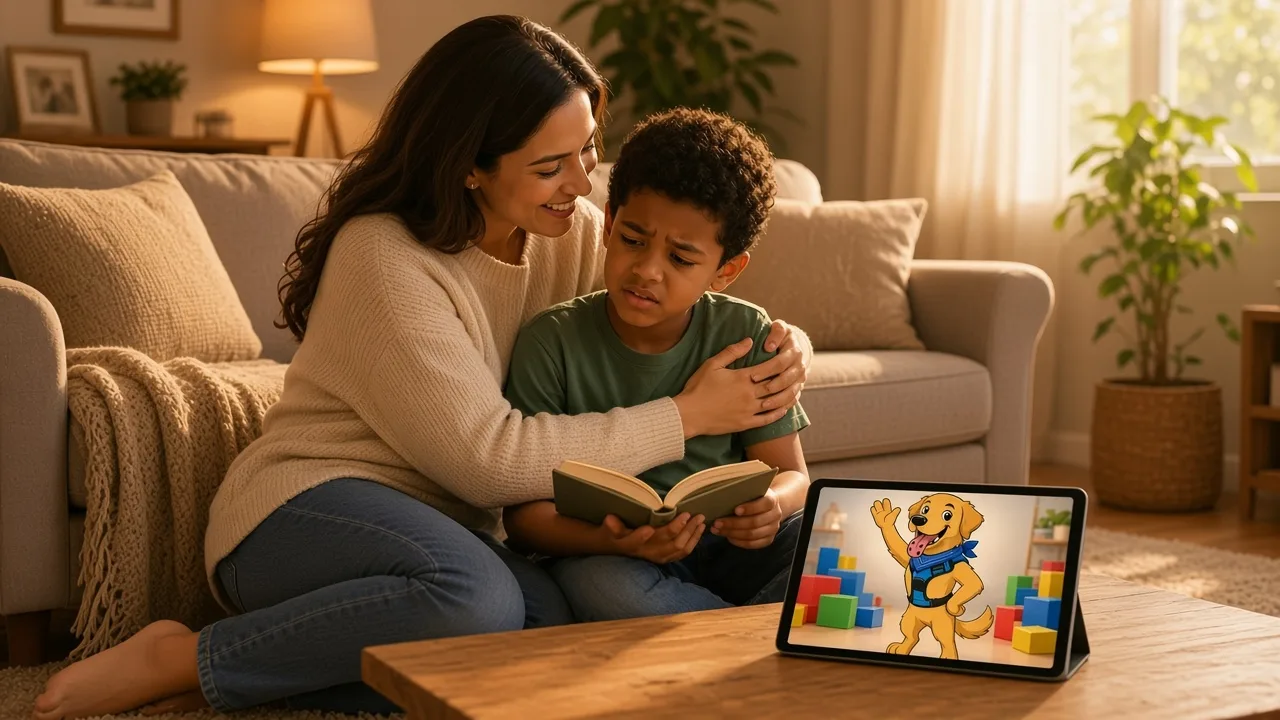
When your child says “I’m dumb,” don’t argue and don’t panic. Get close, stay calm, and say something like: “That sounds like a really frustrating moment. You’re not dumb. This is hard right now, and hard things take practice.” Then help them take one small step they can actually do. What changes a child’s belief about themselves is not one perfect sentence. It is many small moments where they try, get a little better, and notice it.
In my years working with children, I heard “I’m stupid” and “I’m dumb” most often from kids who cared a great deal. They said it right after something felt too hard, usually in front of someone whose opinion mattered to them. It is usually not a final verdict. It is a feeling coming out as words.
Why Kids Say “I’m Dumb”
They just hit something that felt too hard
A word they couldn’t sound out, a math problem that didn’t make sense, a sentence they couldn’t get onto paper. In that moment, “I’m dumb” is how frustration comes out.
The work is ahead of their current skills
If a child keeps running into work a step or two above where they are, they struggle again and again. After enough of that, they start to explain it with “something is wrong with me.” Often the real issue is a skill gap that can be closed with practice at the right level.
They are comparing themselves to others
Children notice who reads the longest books, who finishes first, and which reading group they are in. A child who feels behind may decide it is because they are not smart.
They want to see how you will react
Sometimes “I’m dumb” is a quiet question: “Do you still think I’m capable?” How you answer matters more than you might think.
What Not to Say
- “Don’t say that!” It can make a child feel their feelings are wrong, so they stop sharing them.
- “You’re a genius!” Big praise that doesn’t match what they just felt is hard to believe, and it can raise the pressure.
- “This is easy.” If it’s easy and they can’t do it, the only explanation left is that they are dumb.
- “Your sister never had trouble with this.” Comparisons almost always make it worse.
What to Say When Your Child Says “I’m Dumb”: 8 Steps
1. Name the feeling before the fix
“You’re really frustrated right now.” “That felt hard, didn’t it?” A child who feels understood calms down faster, and a calm brain can learn again.
2. Separate the task from the child
Say it plainly: “This page is hard. That doesn’t mean you’re dumb. It means you haven’t learned this part yet.” Children need to hear that a hard task is about the work, not about who they are.
3. Add the word “yet”
When they say “I can’t read this,” you can add, “You can’t read this yet.” It is a small word, but said over and over, it teaches that skills grow.
4. Shrink the task
Instead of the whole page, try one sentence. Instead of ten problems, try two. Then say, “Look, you did that one.” Success the child can see does more than any pep talk.
5. Point to real proof of growth
Keep a few old worksheets or a short recording of them reading from a month ago. When they feel stuck, show them: “Remember when this word was hard? Now you read it without thinking.” Specific evidence is hard to argue with.
6. Praise effort and strategy, specifically
Skip “good job” and try “You sounded out every part of that long word” or “You kept going even when it got tricky.” This teaches them what to do next time, not just that you’re pleased.
7. Share your own struggles
Tell them about something that was hard for you to learn and how you kept at it. Children feel less alone when they know the adults they admire also had to practice.
8. Make sure the work fits
If “I’m dumb” comes up often around the same subject, look closely at the level of the work. Practicing at the right level, just a little above comfortable, lets children feel success often enough to believe in themselves again. In my doctoral research on Response to Intervention, the heart of the approach is noticing early where a child needs support and matching instruction to that need, rather than waiting for them to fall further behind.

What’s Included in the 12-Week Program?
Everything you need to build stronger reading skills, confidence, and a lifelong love of learning.
- Step-by-Step Reading Lessons Structured lessons matched to the reading skills your child needs to strengthen.
- Your Child’s Personalized Learning Path The assessment identifies where to begin, so your child works on the right skills — not simply material based on age or grade.
- Practice Activities & Progress Checks Fun, engaging activities reinforce each skill, with regular checks to see what’s improving and what still needs practice.
- Parent Teaching Guides Simple, step-by-step instructions show you exactly how to help — without needing teaching experience.
- Learn With Rocky or Learn Together Children who are ready can work more independently with Rocky, while parents who want to participate can follow Nancy’s guided approach.
- 12-Week Progress Reassessment & Report At the end of the program, your child completes a fresh assessment showing strengths, observed progress, remaining needs, and the recommended next learning step.
- Parent Support Included Join Motivation Mondays, Help Wednesdays, Friday Q&A with Nancy Barker. You don’t have to do this alone! You Have a WHOLE TEAM!
Quick & Easy Less Than 10 Min Assessment To Find Where Your Child May Be Falling Behind
Fill out the form and we’ll send you a free assessment to help you identify your child’s strengths and possible areas for growth.
A 2-Minute Script for the Moment It Happens
- Kneel or sit at their level and lower your voice.
- “That was frustrating. I get it.”
- “You’re not dumb. This is just hard right now.”
- “Let’s do just this one together.”
- When they do it: “See that? You figured it out. That’s what learning looks like.”
When to Talk to Your Child’s Teacher
If your child says negative things about themselves often, avoids schoolwork most days, or seems sad or withdrawn beyond homework time, share what you’re seeing with their teacher. If you’re worried about your child’s emotional well-being, talk with your pediatrician.
Frequently Asked Questions
Is it normal for kids to say “I’m stupid”?
Many children say it at some point, especially when schoolwork feels hard. What matters most is how often it happens and how the adults around them respond.
Should I ignore it when my child says “I’m dumb”?
No. Respond calmly, name the feeling, and gently disagree without a lecture. Ignoring it can feel to a child like you agree.
How do I build my child’s confidence in reading?
Give them books and practice at the right level, celebrate small wins, and show them proof of how far they’ve come. Confidence grows from real success.
Help Your Child See What They Can Do
Read Like Rocky, created by Dr. Nancy Barker, Ed.D., who has 49 years in education, starts with a free assessment that shows your child’s strengths and focus areas in reading, writing, and math, so you can practice at the right level and celebrate each step forward.
You can also read how to build confidence in a child who says they’re bad at reading and why some kids are so afraid of making mistakes.
About the author: Dr. Nancy Barker, Ed.D.; 49 years in education; Pepperdine literacy professor; creator of Read Like Rocky.
Research: Barker, N. (2011). Doctoral dissertation on Response to Intervention, Pepperdine University. Pepperdine Digital Commons.
This article is educational and not a medical or clinical evaluation. If you are concerned about your child, talk with your child’s teacher or pediatrician.
Quick & Easy Less Than 10 Min Assessment To Find Where Your Child May Be Falling Behind
Fill out the form and we’ll send you a free assessment to help you identify your child’s strengths and possible areas for growth.