
What Do I Do When My Child Says “I Can’t Do It”?

Quick & Easy Less Than 10 Min Assessment To Find Where Your Child May Be Falling Behind
Fill out the form and we’ll send you a free assessment to help you identify your child’s strengths and possible areas for growth.
When your child says “I can’t do it,” the most helpful first step is to stay calm, name the feeling, and add one small word: yet. “You can’t do it yet.” Then shrink the task until your child can do one piece of it right now. Confidence grows from small, real successes, not from being told “of course you can.”
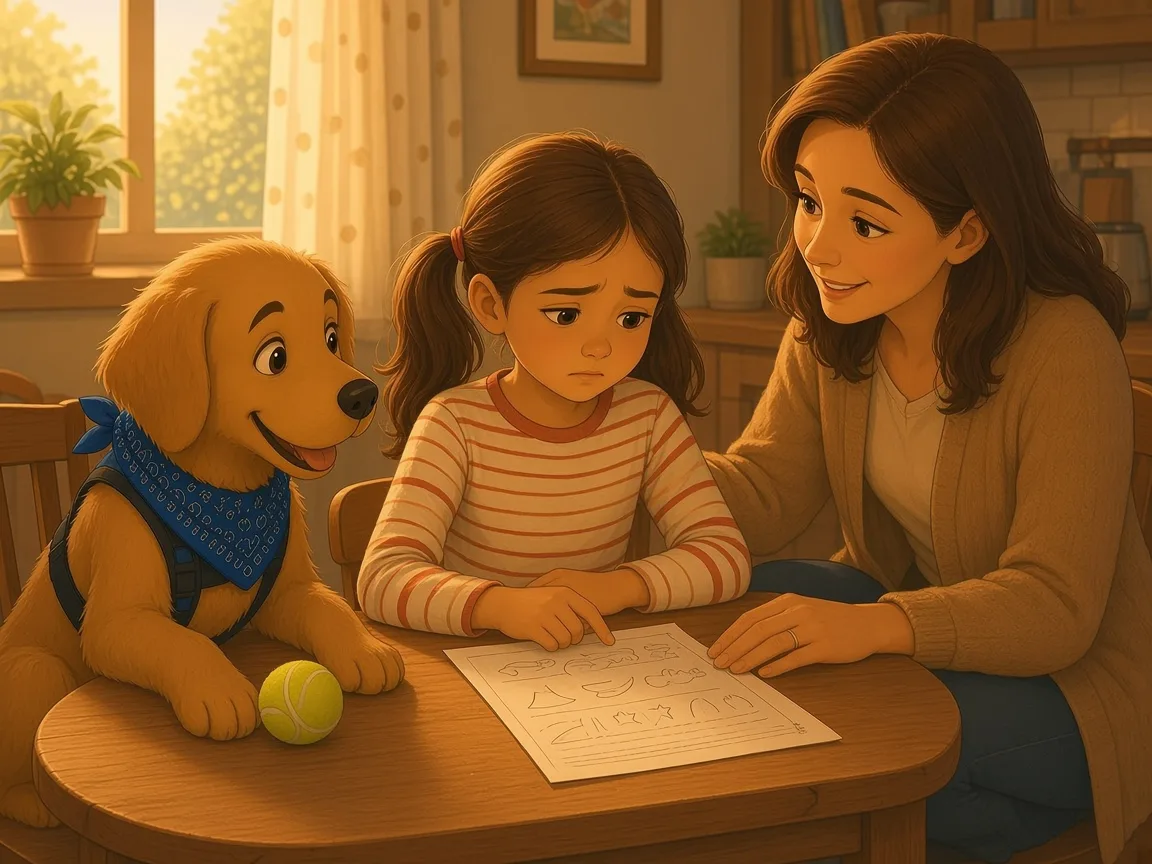
“I can’t do it” is one of the most common things children say when reading, writing, or math gets hard. It can be frustrating to hear, especially when you know your child is capable. But in my experience, a child who says “I can’t” is usually telling us something important: this feels too big for me right now. Our job is to make it smaller.
Why Do Children Say “I Can’t Do It”?
There are a few usual reasons, and it helps to figure out which one fits your child:
- The task really is too hard. If a skill underneath it was never fully learned (like sounding out words, or knowing addition facts), the new work feels impossible. This is the reason parents most often miss.
- The task looks too big. A whole page of words or twenty math problems can feel overwhelming before your child even starts.
- Fear of being wrong. Some children would rather not try than try and fail. Saying “I can’t” protects them from a mistake.
- They are tired or hungry. Right after school, many children simply have little left to give.
What Should I Say When My Child Says “I Can’t”?
Try these responses instead of “Yes you can!” (which can feel to a child like you aren’t listening):
- Name the feeling. “This one feels hard. That’s okay. Hard things feel hard at first.”
- Add “yet.” “You can’t do it yet. Let’s find the first step.”
- Ask what part is hard. “Which part is tricky, the long words or knowing what it means?”
- Remind them of past growth. “Remember when you couldn’t read the word because? Now you read it without even thinking.”
The goal is not to argue your child out of the feeling. It’s to show them a way forward.
How Do I Break the Task Into Smaller Steps?
This is where “I can’t” turns into “I did it.” A few ways to shrink the work:
- Cover most of the page. Use a sheet of paper so your child only sees one line or one problem at a time.
- Do the first one together. Model your thinking out loud, then let your child try the next one.
- Take turns. You read a sentence, your child reads a sentence. You solve one problem, they solve the next.
- Set a short timer. “Let’s work for five minutes, then take a break.” Most children can face anything for five minutes.
- Celebrate the small win. As soon as your child finishes one piece, notice it: “You did that one by yourself.”
Each small success is evidence your child can see for themselves. Over time, that evidence is what replaces “I can’t” with “Let me try.”
What Should I Avoid?
- Doing it for them. It ends the tears quickly, but it teaches your child that “I can’t” works.
- Getting into a power struggle. If emotions are high, take a short break and come back calmer.
- Comparing. “Your sister could do this at your age” makes a child feel worse, not braver.
- Empty praise. “That was easy!” can make a child feel silly for struggling. Praise their effort and the strategy they used instead. My article on how to praise your child to build real confidence has examples.

What’s Included in the 12-Week Program?
Everything you need to build stronger reading skills, confidence, and a lifelong love of learning.
- Step-by-Step Reading Lessons Structured lessons matched to the reading skills your child needs to strengthen.
- Your Child’s Personalized Learning Path The assessment identifies where to begin, so your child works on the right skills — not simply material based on age or grade.
- Practice Activities & Progress Checks Fun, engaging activities reinforce each skill, with regular checks to see what’s improving and what still needs practice.
- Parent Teaching Guides Simple, step-by-step instructions show you exactly how to help — without needing teaching experience.
- Learn With Rocky or Learn Together Children who are ready can work more independently with Rocky, while parents who want to participate can follow Nancy’s guided approach.
- 12-Week Progress Reassessment & Report At the end of the program, your child completes a fresh assessment showing strengths, observed progress, remaining needs, and the recommended next learning step.
- Parent Support Included Join Motivation Mondays, Help Wednesdays, Friday Q&A with Nancy Barker. You don’t have to do this alone! You Have a WHOLE TEAM!
Quick & Easy Less Than 10 Min Assessment To Find Where Your Child May Be Falling Behind
Fill out the form and we’ll send you a free assessment to help you identify your child’s strengths and possible areas for growth.
A Simple “Yet” Routine to Try This Week
- When you hear “I can’t,” answer with “…yet” in a calm, friendly voice.
- Ask one question: “What’s the first small step?”
- Help with only that step, then step back.
- Name what your child did: “You tried it a second way. That’s what readers do.”
- At bedtime, ask, “What’s something you couldn’t do before that you can do now?”
When Should I Talk to My Child’s Teacher?
If your child says “I can’t” about the same subject over and over, even with small steps and lots of encouragement, it may be a sign that a foundational skill is missing. Ask the teacher which specific skills your child is working on and where they are getting stuck. When a missing skill is taught directly, at the right level, the “I can’t” often fades because the work finally makes sense. You may also find how to build confidence in a child who says they’re bad at reading helpful.
How Read Like Rocky Helps Children Say “I Can”
I created Read Like Rocky so children can build reading, writing, and math skills along with the confidence to keep trying. Lessons start at your child’s level, so the work feels doable, and Rocky the reading dog cheers on effort and good strategies, not just right answers. The first step is finding out where your child is today.
Find out where your child should start
About the author: Dr. Nancy Barker, Ed.D.; 49 years in education; Pepperdine literacy professor; creator of Read Like Rocky.
Research: Barker, N. (2011). Doctoral dissertation on Response to Intervention, Pepperdine University. Pepperdine Digital Commons.
This article is educational and not a medical or clinical evaluation. If you are concerned about your child, talk with your child’s teacher or pediatrician.
Quick & Easy Less Than 10 Min Assessment To Find Where Your Child May Be Falling Behind
Fill out the form and we’ll send you a free assessment to help you identify your child’s strengths and possible areas for growth.