
Is My Child Dyslexic, or Just Behind in Reading?

Quick & Easy Less Than 10 Min Assessment To Find Where Your Child May Be Falling Behind
Fill out the form and we’ll send you a free assessment to help you identify your child’s strengths and possible areas for growth.
A child who is just behind usually catches up once they get clear, steady phonics teaching and practice, while a child with dyslexia keeps struggling with sounds, decoding, and spelling even after good teaching. You cannot tell the difference from one bad week of reading, so the best way to know is to watch how your child responds to targeted help and, if the struggle continues, ask for a formal evaluation.
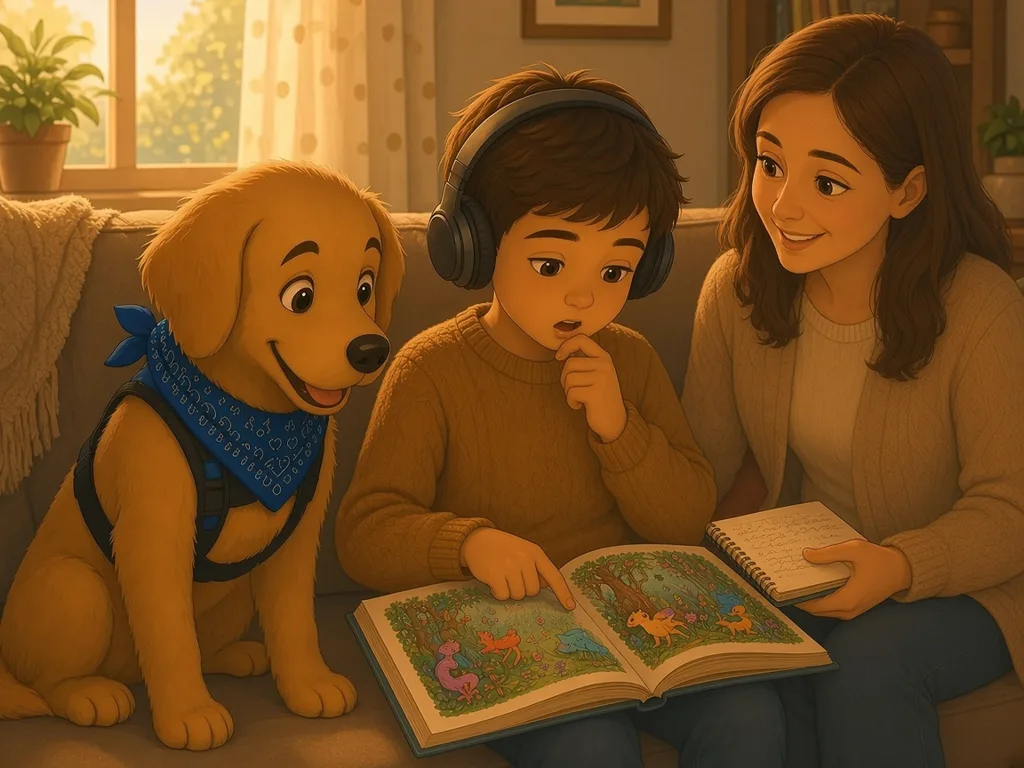
If you are asking whether your child is dyslexic or just behind, you are already doing something important: paying attention. Many children read later than their friends and turn out fine. Others have a real, lasting difference in how they process the sounds in words. Both groups can look the same at first, and both deserve help now, not later. Waiting to “see if they grow out of it” costs time either way.
What “Just Behind” Usually Looks Like
Children fall behind in reading for many ordinary reasons: missed school, a move, a curriculum that did not teach phonics clearly, a late birthday, not much reading practice at home, or simply a slower start. Signs that point more toward “behind” include:
- Steady progress once skills are taught directly. When someone explicitly teaches a sound or a pattern, your child picks it up and keeps it.
- Gaps that match missed instruction. For example, they never learned vowel teams because that unit was skipped, but they learn them quickly now.
- Spelling that improves as reading improves. The two skills move forward together.
- Remembering words from day to day after practicing them a few times.
- Growing confidence after a few weeks of consistent, simple practice.
Signs That Point Toward Dyslexia
Dyslexia is a language-based learning difference that mainly affects accurate, fluent word reading and spelling. It is not a vision problem, and it has nothing to do with intelligence or effort. Signs that suggest it is worth looking deeper include:
- Slow progress even with good, consistent teaching. This is the biggest clue. Skills that are taught well still do not stick.
- Trouble with sounds in spoken words, such as rhyming, clapping syllables, or telling you the first sound in “map.”
- Difficulty linking letters to sounds, or forgetting letter sounds that were learned last week.
- Guessing at words from the first letter or the picture instead of sounding them out.
- Reading the same word correctly on one page and missing it on the next.
- Spelling that is very hard to read, with sounds missing or out of order.
- Strong understanding when listening to a story read aloud, but much weaker understanding when reading alone.
- Family history. Dyslexia often runs in families, so a parent or sibling who struggled with reading is worth mentioning to the school.
- Early speech and language signs, such as trouble learning letter names, mixing up sounds in long words, or difficulty finding the right word.
One sign alone does not mean dyslexia. A pattern of several signs that lasts even after solid teaching is what matters.
The Key Question: How Does Your Child Respond to Help?
Schools often use an approach called Response to Intervention (RTI). The idea is simple: give a child clear, targeted teaching, check progress often, and see how they respond. A child who is behind usually responds well and starts closing the gap. A child who barely moves forward, even with good help, may need a closer look for a learning difference like dyslexia.
You can use the same thinking at home. For several weeks, practice the exact skill your child is missing for a few minutes a day, such as short vowel sounds or blending sounds into words. Keep simple notes: which words they read, which ones they missed, and whether last week’s skills are still there. Those notes are very helpful if you later talk with the teacher or ask for an evaluation.
What to Do Right Now
- Find out exactly which skills are missing. “Behind in reading” is too broad. Is it letter sounds, blending, vowel patterns, sight words, or fluency? A reading skills check gives you a starting point.
- Teach those skills directly and in order. Systematic, explicit phonics helps children who are behind and children with dyslexia. You do not need a diagnosis to start.
- Practice a little every day. Ten to fifteen focused minutes, done consistently, usually beats one long session a week.
- Talk to the teacher. Ask what they see in class, which skills they are working on, and whether your child is getting extra reading support.
- Ask for an evaluation if progress stays slow. In the U.S., you can put a written request to the school for an evaluation. You do not have to wait for the school to suggest it. See can a school refuse to evaluate my child for what to know.
- Get an eye and hearing check. Ruling out vision and hearing problems is a good step for any child who struggles. Read more in does my child need reading glasses.

What’s Included in the 12-Week Program?
Everything you need to build stronger reading skills, confidence, and a lifelong love of learning.
- Step-by-Step Reading Lessons Structured lessons matched to the reading skills your child needs to strengthen.
- Your Child’s Personalized Learning Path The assessment identifies where to begin, so your child works on the right skills — not simply material based on age or grade.
- Practice Activities & Progress Checks Fun, engaging activities reinforce each skill, with regular checks to see what’s improving and what still needs practice.
- Parent Teaching Guides Simple, step-by-step instructions show you exactly how to help — without needing teaching experience.
- Learn With Rocky or Learn Together Children who are ready can work more independently with Rocky, while parents who want to participate can follow Nancy’s guided approach.
- 12-Week Progress Reassessment & Report At the end of the program, your child completes a fresh assessment showing strengths, observed progress, remaining needs, and the recommended next learning step.
- Parent Support Included Join Motivation Mondays, Help Wednesdays, Friday Q&A with Nancy Barker. You don’t have to do this alone! You Have a WHOLE TEAM!
Quick & Easy Less Than 10 Min Assessment To Find Where Your Child May Be Falling Behind
Fill out the form and we’ll send you a free assessment to help you identify your child’s strengths and possible areas for growth.
What to Avoid
- Waiting and hoping. Whether your child is behind or dyslexic, earlier help is easier help.
- Calling it laziness. Children who avoid reading are often avoiding something that feels hard and embarrassing, not something they do not care about.
- Endless guessing practice. Encouraging a child to guess from pictures can hide the real problem. Teach them to look at every letter and sound the word out.
- Comparing them to siblings or classmates in front of them. Compare your child only to where they were last month.
How to Talk to Your Child About It
Children notice when reading is harder for them than for their friends. Tell them plainly that their brain is still learning how letters and sounds fit together, that this is something they can get better at with practice, and that you are on their team. Praise effort and strategy, such as “You looked at every letter in that word,” instead of only praising right answers. A child who feels safe making mistakes will practice more.
Frequently Asked Questions
At what age can a child be tested for dyslexia?
Signs can show up in preschool and kindergarten, and many evaluators assess children once formal reading instruction has started, often around kindergarten to second grade. If you see strong warning signs, you do not need to wait for a certain grade to raise the concern. Learn more in how to test for dyslexia.
Can a child be both behind and dyslexic?
Yes. A child with dyslexia often falls behind because the reading process is harder for them. That is one reason it helps to start targeted teaching right away while you find out more.
Does dyslexia mean my child is not smart?
No. Dyslexia is not related to intelligence. Many children with dyslexia are strong thinkers, talkers, and problem solvers. Their difficulty is with the sound-and-print side of reading.
Will my child outgrow dyslexia?
Dyslexia does not go away, but children with dyslexia can become capable, confident readers with the right teaching. Structured, explicit phonics instruction is the approach most often recommended. See what is structured literacy.
What if the school says my child is just behind?
Ask what support your child is getting, how progress is being measured, and when you will review it together. If your child is not responding to that support, you can make a written request for an evaluation.
Find Out Where Your Child Should Start
The first step for any struggling reader is knowing which skills are solid and which need work. Read Like Rocky, a 12-week program created by Dr. Nancy Barker, Ed.D., who has 49 years in education, begins with a free reading assessment that shows your child’s strengths and focus areas. It does not diagnose dyslexia, but it shows you where to begin teaching.
Find out where your child should start
About the author: Dr. Nancy Barker, Ed.D.; 49 years in education; Pepperdine literacy professor; creator of Read Like Rocky.
Research: Barker, N. (2011). Doctoral dissertation on Response to Intervention, Pepperdine University. Pepperdine Digital Commons.
This article is educational and not a medical or clinical evaluation. If you are concerned about your child, talk with your child’s teacher or pediatrician.
Quick & Easy Less Than 10 Min Assessment To Find Where Your Child May Be Falling Behind
Fill out the form and we’ll send you a free assessment to help you identify your child’s strengths and possible areas for growth.