

Quick & Easy Less Than 10 Min Assessment To Find Where Your Child May Be Falling Behind
Fill out the form and we’ll send you a free assessment to help you identify your child’s strengths and possible areas for growth.
Extra Help & Resources Give You the Tools to Support Your Child’s Reading Journey. Here’s Why.
Looking for tips, tools, and trusted resources to help your child with reading? The right resources can give you guidance, ideas, and support, no matter where your child is on their reading journey.
Is This Your Child?
- You’re not sure which books are the right fit for your child.
- You’re searching for fun activities and games to practice at home.
- You want trusted guidance, not another overwhelming list.
- You’re looking for ways to give your child a little extra practice.
You’re already doing something important by looking for ways to help. Here’s how to make the search simpler.
What Are Reading Resources?
Reading resources include tips, tools, activities, and guidance to help your child build essential reading skills and confidence.
Why Resources Are Important
- Provide practical strategies you can use at home
- Help you understand your child’s specific needs
- Offer ideas for books, activities, and games
- Connect you with trusted information and support
- Keep reading fun and engaging
Signs You May Need Extra Help & Resources
- Not sure which books to choose
- Wants fun, engaging reading activities
- Needs additional practice at home
- Looking for expert guidance and tips
- Wants more ways to support their child
Finding the Right Reading Resources for Your Child
There’s no shortage of reading advice, apps and books online, and that can feel overwhelming. The most useful resources aren’t always the most popular ones. They’re the ones that suit your child’s current skills and interests.
A good resource gives you something you can use today: a clear idea, a short activity, or a book your child actually wants to open. Resources work best when they match what your child needs next, which is why it helps to know your child’s strengths and gaps first.
It’s also worth remembering that your child’s teacher and your local librarian are valuable resources, and they know many books, programs and ideas.
What Usually Helps
Here are a few ways to find good help without feeling overloaded.
Visit your local library
Librarians can help you find books at the right level and on topics your child loves. Borrowing lets you try books without any commitment.
Ask your child’s teacher
Teachers can tell you what your child is working on and may suggest books or activities that fit.
Choose books by interest first
A topic your child loves is often a stronger pull than a reading level. Offer a mix of easy, medium and slightly harder books.
Try low-tech activities
Word games, rhyming games, storytelling in the car and write-and-draw journals need no equipment and add practice in a fun way.
Start with one thing
Pick one idea at a time and stick with it for a few weeks, instead of trying everything at once.
How Our Free Assessment Can Help
Our quick and easy assessment identifies your child’s current reading skills, shows specific areas to focus on, and recommends the best next steps for their reading journey. You’ll get a clear picture of where they are and how we can help them grow.
Watch: Helpful Reading Resources for Families
How Rocky Can Help (A Real Example)
Meet Ethan.
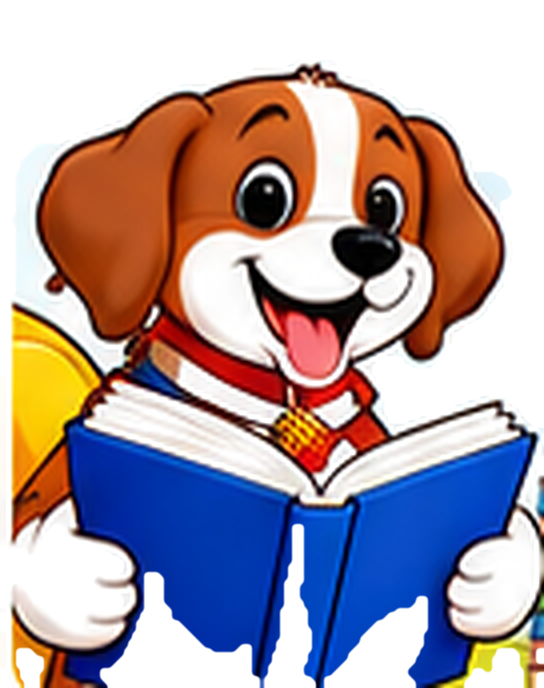
Ethan’s parents wanted more ideas to support his reading. After the assessment, Rocky recommended personalized activities, books, and resources based on Ethan’s needs and interests.
This is an illustrative example, not a real family’s story.
Now they have simple, effective tools to keep him reading and growing!
Real skills.
Real progress.
Real smiles!
How Read Like Rocky Can Help
Read Like Rocky starts with a free assessment, so you can see your child’s strengths and what to practice next. That makes it much easier to choose the right activities.
From there, your child follows a 12-week plan of three lessons a week, with stories, practice activities and progress checks starring Rocky the golden retriever. Dr. Nancy Barker’s parent teaching guides show you how to help, and a reassessment at week 12 shows progress and a recommended next step. The plan covers both reading and writing practice where it fits.
Start the Free AssessmentA free assessment first
See where your child is today with the right next steps. No purchase is needed to take it.
A 12-week plan
Three lessons a week, 36 per pathway (180 core reading lessons across 5 pathways), matched to your child’s learning path rather than only their age or grade.
Guidance for you
Parent teaching guides explain each step in plain language, so you don’t need teaching experience.
Progress you can see
Practice activities and progress checks along the way, and a reassessment at week 12 that shows strengths, progress and next steps.
When to Get Extra Support
Resources are a great help, and so are people. If your child continues to struggle with reading despite regular practice, it’s a good idea to talk with your child’s teacher or the school’s reading specialist. If you have concerns about how your child is learning, another qualified professional can look more closely.
Read Like Rocky is an educational program. It does not diagnose, treat or replace advice from a professional.

About Dr. Nancy Barker, Ed.D.
Dr. Nancy Barker is an educator who has dedicated her career to helping children become stronger, more confident readers. She created Read Like Rocky so parents can support their child’s reading and writing at home with clear, step-by-step guidance.
- Ed.D. in Educational Leadership, Pepperdine University (2011)
- M.A. in Educational Administration, California Lutheran University (1994)
- M.S. in Education (Speech & Language Disorders), University of Southern California (1982)
- B.A. in Liberal Studies, California State University, Northridge (1976)
- California Administrative Services Credential
- Resource Specialist Credential
- Specialist Credential: Learning & Severely Handicapped
- CLAD Certification
- 49 years in education
- K–12 Director of Curriculum & Instruction
- 19 years as an elementary school principal and teacher
Questions Parents Often Ask
How do I choose the right book for my child?
Ask your child to read a page out loud. If they read most of it comfortably, the book is likely a good fit for practice. If they stumble often, try an easier one or read it together. A mix of levels is fine, and interest matters as much as level.
Are apps and screens good for reading practice?
They can be one tool among many. Some children enjoy them, while others focus better with paper books. Whatever you choose, time reading together and talking about stories is valuable.
Where can I find reading help beyond home?
Start with your child’s teacher, the school’s reading specialist (if there is one) and your local library. They can point you to programs and materials in your community.
What does Read Like Rocky include?
Each reading pathway has 36 step-by-step lessons over 12 weeks (three a week), and there are 5 pathways with 180 core reading lessons in total. The program also includes a personalized learning path based on the assessment, practice activities and progress checks, parent teaching guides, and a 12-week progress reassessment and report.
Is the assessment really free?
Yes. The reading assessment is free, and no purchase is required. We ask for your name and email so we can share your child’s results and recommended next steps.
What happens after the assessment?
You receive your child’s results and a recommended learning path. You can then decide whether the Read Like Rocky program is right for your family.
Ready to Find the Right Next Step?
The free assessment is a calm first step. It shows your child’s strengths, what to work on next, and a recommended path. No purchase is needed.
Explore Other Reading Topics
Every child’s reading journey is different. Choose a topic below to learn more or take a free assessment.
- Click Here to Visit

Meet Dr. Nancy
Learn about Dr. Nancy’s experience, credentials, and approach.
- Click Here to Learn More
Phonics Gaps
Makes words hard to sound out.
- Click Here to Learn More
Weak Comprehension
Reads the words but struggles to understand them.
- Click Here to Learn More

Vocabulary Development
Needs help learning and using new words.
- Click Here to Learn More

Reading Fluency
Reads slowly or struggles to read smoothly.
- Click Here to Learn More

Attention & Focus
Gets easily distracted during reading.
- Click Here to Learn More

Confidence & Motivation
Lacks confidence or avoids reading.
- Click Here to Learn More

Support at Home
Not sure how to help or where to start.
Quick & Easy Less Than 10 Min Assessment To Find Where Your Child May Be Falling Behind
Fill out the form and we’ll send you a free assessment to help you identify your child’s strengths and possible areas for growth.